Hydroquinone → Formaldehyde
Reaction equation

[C:1]1(C=CC=C(O)C=1)[OH:2].[C:9]1([CH:16]=[CH:15][C:13](O)=[CH:12][CH:11]=1)[OH:10].OC1C=CC(C(C2C=CC(O)=CC=2)(C)C)=CC=1.BrC1C=C(C(C2C=C(Br)C(O)=C(Br)C=2)(C)C)C=C(Br)C=1O.C1C(O)=CC=C(S(C2C=CC(O)=CC=2)(=O)=O)C=1>>[CH2:1]=[O:2].[C:9]1([OH:10])[CH:16]=[CH:15][CH:13]=[CH:12][CH:11]=1Participants
7





Procedure
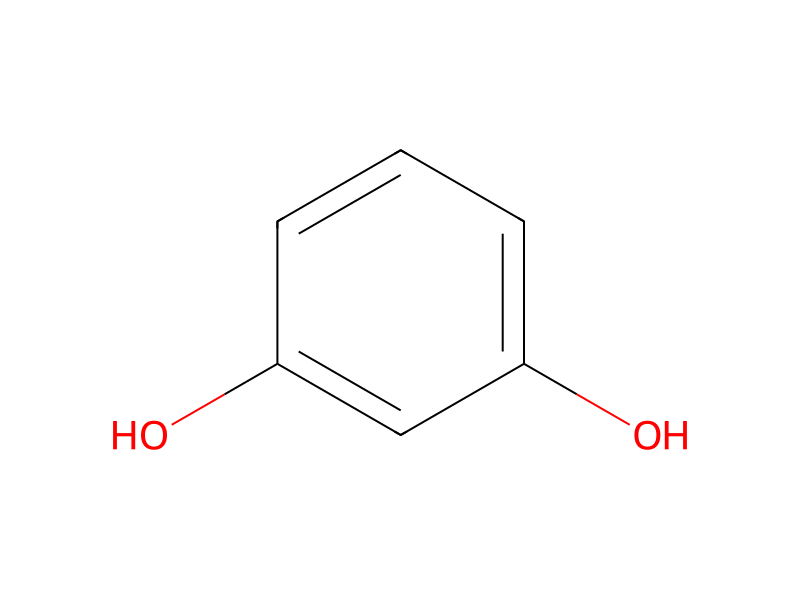
The epoxy compounds may also be derived from mononuclear phenols, such as resorcinol or hydroquinone; or else they are based on polynuclear phenols, such as on bis(4-hydroxyphenyl)methane, 2,2-bis(4-hydroxyphenyl)propane, 2,2-bis(3,5-dibromo-4-hydroxyphenyl)propane or 4,4′-dihydroxydiphenyl sulfone, or on condensates of phenols with formaldehyde that are obtained under acidic conditions, such as phenol novolaks.
Sources & evidence
- ORD record
- ord-1c948890afdd41428d304827491432c8
- Source dataset
- uspto-grants-2005_04
- Patent number
- US06875831B1
Reaction notes
Loading…