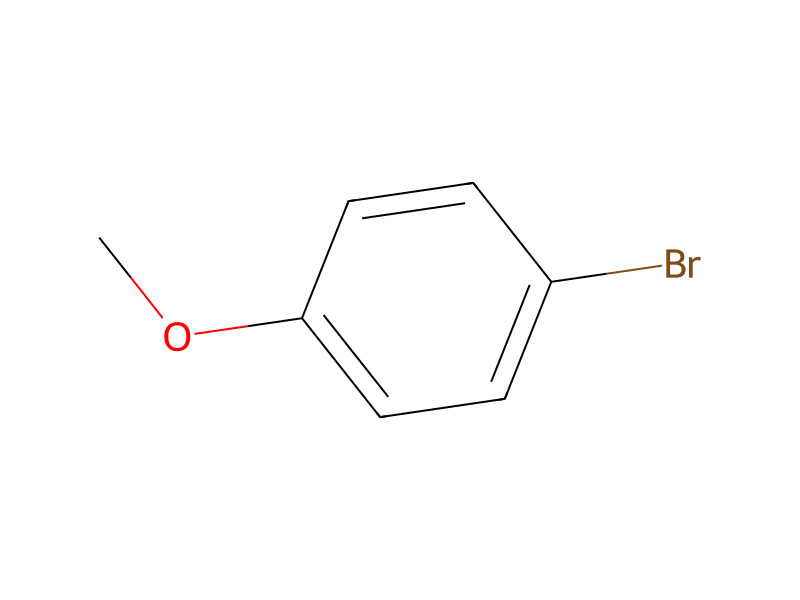
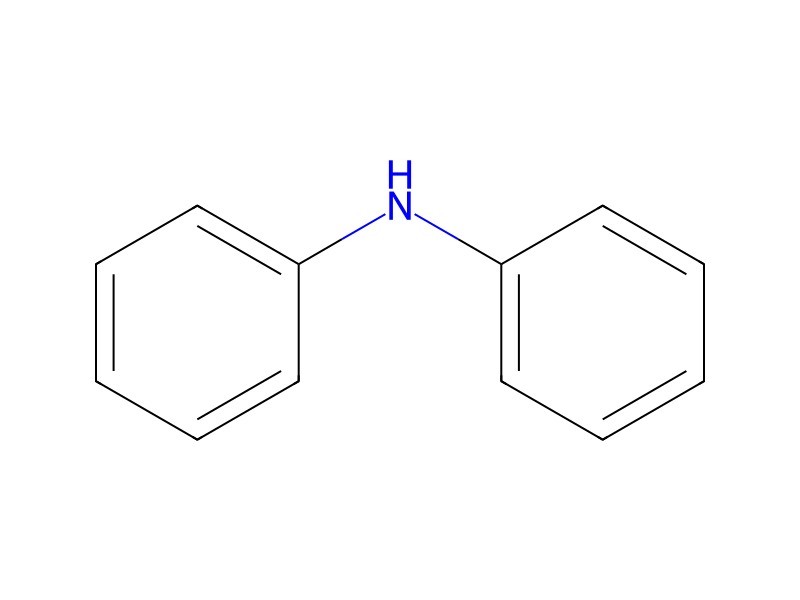
4-Bromoanisole → 4-Methoxytriphenylamine
Reaction equation

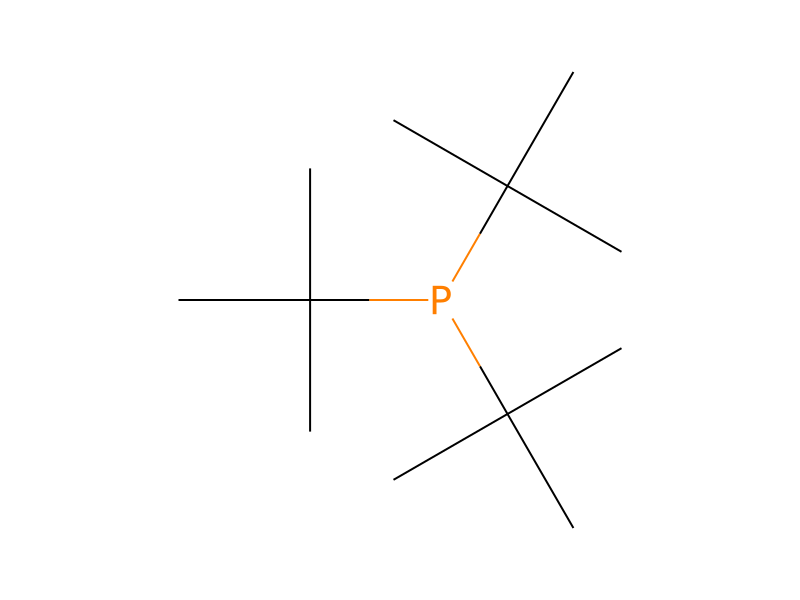
[C:1]1([NH:7][C:8]2[CH:13]=[CH:12][CH:11]=[CH:10][CH:9]=2)[CH:6]=[CH:5][CH:4]=[CH:3][CH:2]=1.[CH3:14][O:15][C:16]1[CH:21]=[CH:20][C:19](Br)=[CH:18][CH:17]=1.O(C(C)(C)C)[Na].P(C(C)(C)C)(C(C)(C)C)C(C)(C)C>C1(C)C=CC=CC=1.C1C=CC(/C=C/C(/C=C/C2C=CC=CC=2)=O)=CC=1.C1C=CC(/C=C/C(/C=C/C2C=CC=CC=2)=O)=CC=1.C1C=CC(/C=C/C(/C=C/C2C=CC=CC=2)=O)=CC=1.[Pd].[Pd]>[CH3:14][O:15][C:16]1[CH:21]=[CH:20][C:19]([N:7]([C:8]2[CH:9]=[CH:10][CH:11]=[CH:12][CH:13]=2)[C:1]2[CH:6]=[CH:5][CH:4]=[CH:3][CH:2]=2)=[CH:18][CH:17]=1Participants
Reactant 4

Product 1

Reagents, catalysts & solvents 2


Conditions
- Temperature
- 100 °C
Procedure
10 g of diphenylamine and 11 g of 4-methoxy-bromobenzene was dissolved in toluene (250 mL). NaO-t-Bu (5.3 g), Pd2(dba)3 (0.4 g), and P(t-Bu)3 (0.5 g) were added to the above solution at room temperature. The reaction mixture was stirred at 100° C. for 12 hours under N2 After cooling to room temperature, the mixture was quenched by adding aqueous ammonia (300 mL). An organic layer was separated from the reactant solution using methylene chloride and dried using magnesium sulfate. Then, methylene chloride was removed under reduced pressure and recrystallized using methylene chloride and hexane, yielding 70% of a white solid. Data of NMR spectra and elemental analysis confirmed that the product had the same structure as the compound (6) in the reaction scheme 4.
Workup
- temperatureAfter cooling to room temperature
- customthe mixture was quenched
- additionby adding aqueous ammonia (300 mL)
- customAn organic layer was separated from the reactant solution
- customdried
- customThen, methylene chloride was removed under reduced pressure
- customrecrystallized
Sources & evidence
- ORD record
- ord-e02309ca286546059dd4a40a9e0e3f88
- Source dataset
- uspto-grants-2005_04
- Patent number
- US06878468B2
Reaction notes
Loading…