Potassium Phosphate, Tribasic → HCID 22495628, compound
Reaction equation

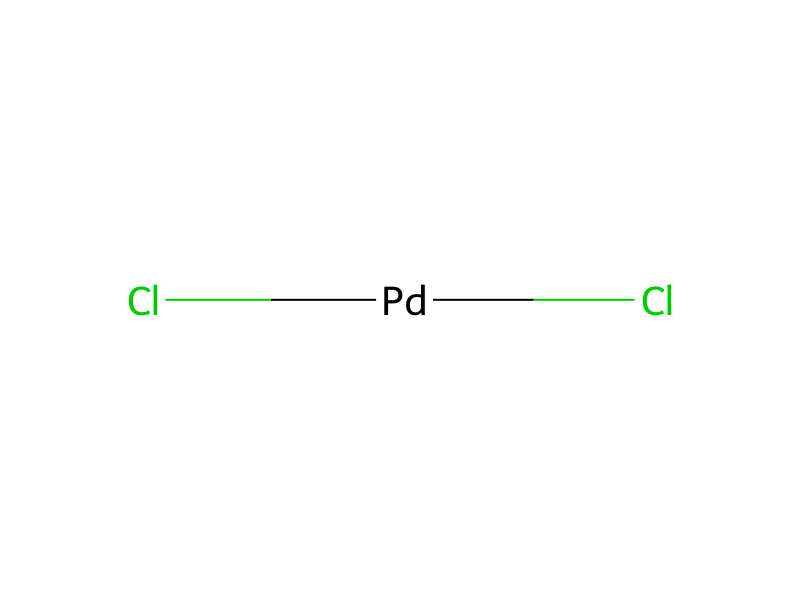
[F:1][C:2]1[CH:3]=[C:4](Br)[C:5]2[O:9][CH:8]=[CH:7][C:6]=2[CH:10]=1.C([O-])(=O)C.[K+].P([O-])([O-])([O-])=O.[K+].[K+].[K+].[C:25]([O:29][C:30]([N:32]1[CH2:37][CH2:36][C:35](OS(C(F)(F)F)(=O)=O)=[CH:34][CH:33]1[CH3:46])=[O:31])([CH3:28])([CH3:27])[CH3:26]>O1CCCC1.[Pd](Cl)Cl.C1(P(C2C=CC=CC=2)[C-]2C=CC=C2)C=CC=CC=1.[C-]1(P(C2C=CC=CC=2)C2C=CC=CC=2)C=CC=C1.[Fe+2].C1(P([Pd-4](P(C2C=CC=CC=2)(C2C=CC=CC=2)C2C=CC=CC=2)(P(C2C=CC=CC=2)(C2C=CC=CC=2)C2C=CC=CC=2)P(C2C=CC=CC=2)(C2C=CC=CC=2)C2C=CC=CC=2)(C2C=CC=CC=2)C2C=CC=CC=2)C=CC=CC=1.C(OCC)C.C1(C)C=CC=CC=1>[C:25]([O:29][C:30]([N:32]1[CH2:37][CH2:36][C:35]([C:4]2[C:5]3[O:9][CH:8]=[CH:7][C:6]=3[CH:10]=[C:2]([F:1])[CH:3]=2)=[CH:34][CH:33]1[CH3:46])=[O:31])([CH3:28])([CH3:26])[CH3:27]Participants
Reactant 4




Product 1

Reagents, catalysts & solvents 6





Conditions
- Temperature
- 90 °C
Procedure
A flask purged of oxygen and under a nitrogen atmosphere was charged with 0.104 gm (0.482 mMol) 5-fluoro-7-bromobenzofuran, 0.184 gm (0.723 mMol) bis(pinacolato)di-boron, 0.0043 gm (0.0024 mMol) palladium(II) chloride, 0.016 gm (0.0029 mMol) 1,1′-bis(diphenylphosphino)ferrocene, 0.142 gm (1.45 mMol) potassium acetate, and 3 mL toluene. This mixture was heated at 90° C. for 5 hours and was then poured into 150 mL diethyl ether and filtered through a bed of celite. The filtrate was concentrated under reduced pressure to provide a dark residue. This material was dissolved in 3 mL tetrahydrofuran and the resulting solution purged of oxygen and placed under a nitrogen atmosphere. To this solution were added 0.028 gm (0.0024 mMol) tetrakis(triphenylphosphino)palladium(0), 0.153 gm (0.723 mMol) potassium phosphate, and 0.15 gm (0.434 mMol) 1-(tert-butoxycarbonyl)-2-methyl-4-trifluoromethylsulfonyloxy-1,2,5,6-tetrahydropyridine. The resulting mixture was stirred at reflux for 3.5 hours and was then charged with an additional 0.5 equivalents of 1-(tert-butoxycarbonyl)-2-methyl-4-trifluoromethylsulfonyloxy-1,2,5,6-tetrahydropyridine. The mixture was stirred at reflux for an additional 1.5 hours and was then poured into 150 mL diethyl ether. The mixture was filtered through a bed of celite and the filtrate concentrated under reduced pressure. The residue was dissolved in 2 mL dichloromethane and the solution was subjected to silica gel chromatography, eluting with a gradient of hexane containing 0-5% ethyl acetate. Fractions containing product were combined and concentrated under reduced pressure to provide 0.10 gm (62%) of the desired compound.
Workup
- customA flask purged of oxygen and under a nitrogen atmosphere
- filtrationfiltered through a bed of celite
- concentrationThe filtrate was concentrated under reduced pressure
- customto provide a dark residue
- customthe resulting solution purged of oxygen
- temperatureat reflux for 3.5 hours
- stirringThe mixture was stirred
- temperatureat reflux for an additional 1.5 hours
- filtrationThe mixture was filtered through a bed of celite
- concentrationthe filtrate concentrated under reduced pressure
- dissolutionThe residue was dissolved in 2 mL dichloromethane
- washeluting with a gradient of hexane containing 0-5% ethyl acetate
- additionFractions containing product
- concentrationconcentrated under reduced pressure
Sources & evidence
- ORD record
- ord-c789f238257143b7a72043ac9dc87156
- Source dataset
- uspto-grants-2005_04
- Patent number
- US06881733B1
Reaction notes
Loading…