2,4-Dichloro-1,3,5-triazine → HCID 22028111, compound
Reaction equation

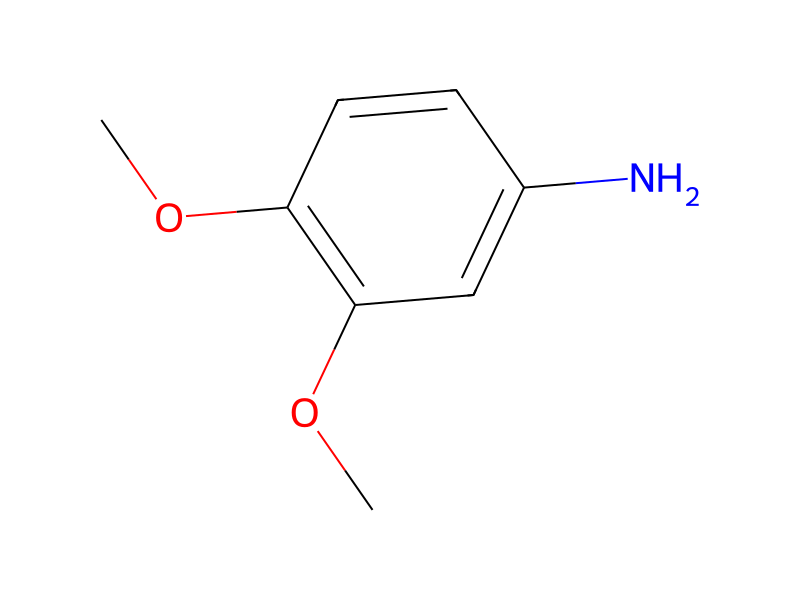
Cl[C:2]1[N:7]=[C:6]([Cl:8])[N:5]=[CH:4][N:3]=1.CCN(C(C)C)C(C)C.[NH2:18][C:19]1[CH:20]=[C:21]([O:27][CH3:28])[C:22]([O:25][CH3:26])=[CH:23][CH:24]=1>CN(C=O)C>[Cl:8][C:6]1[N:5]=[CH:4][N:3]=[C:2]([NH:18][C:19]2[CH:24]=[CH:23][C:22]([O:25][CH3:26])=[C:21]([O:27][CH3:28])[CH:20]=2)[N:7]=1Participants
5
Reactant 3


Product 1

Reagents, catalysts & solvents 1

Conditions
- Temperature
- 0 °C
Procedure
2,4-Dichloro-1,3,5-triazine (12.6 g, 84 mmol) was dissolved into DMF (100 mL) under N2 and cooled to 0° C. DIEA (11.7 g, 90 mmol) was added, followed by 4-aminoveratrole (13.35 g, 87 mmol). The reaction solution was stirred with gradual warming to RT. The reaction was quenched after 3.5 h with water, which causes a gray precipitate to form. This precipitate was recovered by vacuum filtration, washed with cold water, dried under high vacuum, then eluted through a 28×4.5 cm column of silica gel (0.1% NH4OH(aq) buffered 1%, 2%, 3%, 4%, and 5% MeOH/CH2Cl2 step gradient) giving (4-chloro-[1,3,5]triazin-2-yl)-(3,4-dimethoxy-phenyl)-amine as an off white solid.
Workup
- temperaturewith gradual warming to RT
- customThe reaction was quenched after 3.5 h with water, which
- customto form
- filtrationThis precipitate was recovered by vacuum filtration
- washwashed with cold water
- customdried under high vacuum
- washeluted through a 28×4.5 cm column of silica gel (0.1% NH4OH(aq) buffered 1%, 2%, 3%, 4%, and 5% MeOH/CH2Cl2 step gradient)
Sources & evidence
- ORD record
- ord-f7c15ea2c0f44e80a7ebc3bcfcf7d5a4
- Source dataset
- uspto-grants-2005_04
- Patent number
- US06881737B2
Reaction notes
Loading…