Water → 1-Isopropyl-1,2,3,4-tetrahydroquinoline
Reaction equation

[NH:1]1[C:10]2[C:5](=[CH:6][CH:7]=[CH:8][CH:9]=2)[CH2:4][CH2:3][CH2:2]1.[CH:11](I)([CH3:13])[CH3:12].C(=O)([O-])[O-].[K+].[K+].O>CN(C)C=O.C(OCC)(=O)C.CCCCCC>[CH:11]([N:1]1[C:10]2[C:5](=[CH:6][CH:7]=[CH:8][CH:9]=2)[CH2:4][CH2:3][CH2:2]1)([CH3:13])[CH3:12]Participants
7






Conditions
- Temperature
- 60 °C
Procedure
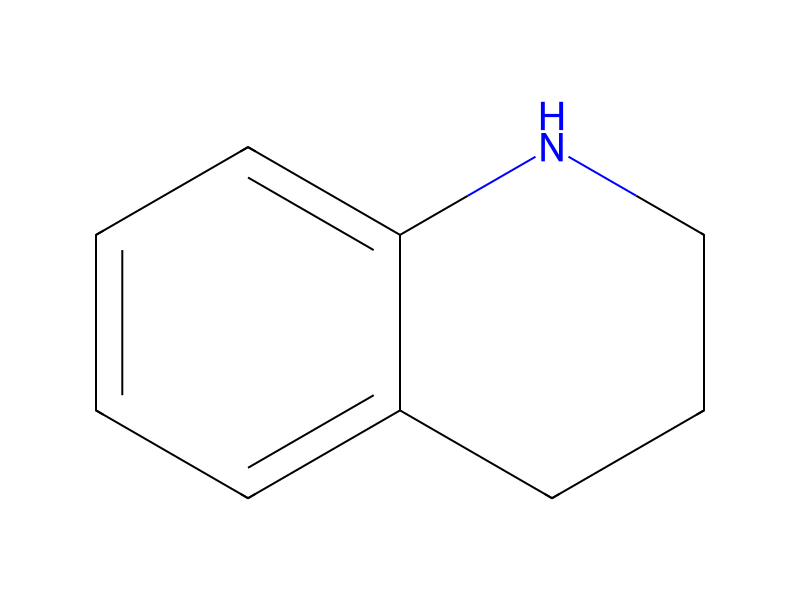
In 60 ml of N,N-dimethylformamide were dissolved 13.8 g of 1,2,3,4-tetrahydroquinoline. To the resulting solution were added 21.1 g of isopropyl iodide and 20.6 g of potassium carbonate, followed by stirring under heat at 60° C. for 5 hours. Water was added to the reaction mixture and the resulting mixture was extracted with ethyl acetate. The organic layer was washed with saturated saline, dried over anhydrous magnesium sulfate and concentrated under reduced pressure. The residue so obtained was subjected to chromatography on a silica gel column (developing solvent: 3% ethyl acetate/n-hexane), whereby 13.1 g of the title compound were obtained in the form of a colorless oil.
Workup
- extractionthe resulting mixture was extracted with ethyl acetate
- washThe organic layer was washed with saturated saline
- dry with materialdried over anhydrous magnesium sulfate
- concentrationconcentrated under reduced pressure
- customThe residue so obtained
Sources & evidence
- ORD record
- ord-e49c83cbb4ae46ce8d297069a3f62271
- Source dataset
- uspto-grants-2005_04
- Patent number
- US06884808B2
Reaction notes
Loading…