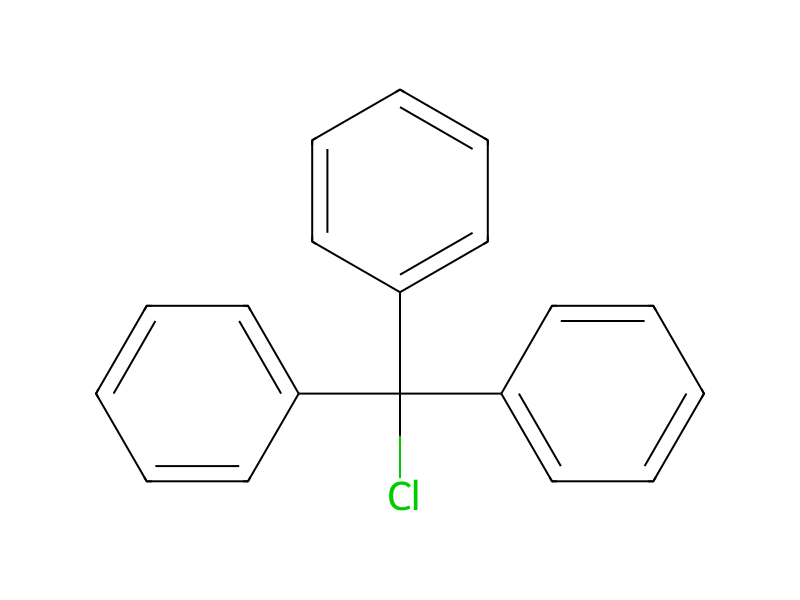
Trityl chloride → 5-Trityloxypentanol
Reaction equation

[CH2:1]([OH:7])[CH2:2][CH2:3][CH2:4][CH2:5][OH:6].[C:8](Cl)([C:21]1[CH:26]=[CH:25][CH:24]=[CH:23][CH:22]=1)([C:15]1[CH:20]=[CH:19][CH:18]=[CH:17][CH:16]=1)[C:9]1[CH:14]=[CH:13][CH:12]=[CH:11][CH:10]=1>>[C:8]([O:6][CH2:5][CH2:4][CH2:3][CH2:2][CH2:1][OH:7])([C:9]1[CH:14]=[CH:13][CH:12]=[CH:11][CH:10]=1)([C:21]1[CH:22]=[CH:23][CH:24]=[CH:25][CH:26]=1)[C:15]1[CH:16]=[CH:17][CH:18]=[CH:19][CH:20]=1Participants
3


Procedure
The procedure described in example 41 was followed but using 1,5-pentandiol (376 mg, 3.6 mmol) as alcohol instead of cis-2-buten-1,4-diol in the reaction with trityl chloride, which gave the title compound (300 mg, 24%).
Sources & evidence
- ORD record
- ord-e54e38500dd54cad8827ebf8552e171c
- Source dataset
- uspto-grants-2009_10
- Patent number
- US07601702B2
Reaction notes
Loading…