Triethylamine → HCID 49830292, compound
Reaction equation

[Br:1][C:2]1[CH:3]=[C:4]([C:9]([C:13]2[CH:18]=[CH:17][CH:16]=[CH:15][CH:14]=2)=[CH:10]OC)[C:5]([NH2:8])=[N:6][CH:7]=1.Cl(O)(=O)(=O)=O.C(N(CC)CC)C>O1CCOCC1>[Br:1][C:2]1[CH:3]=[C:4]2[C:9]([C:13]3[CH:18]=[CH:17][CH:16]=[CH:15][CH:14]=3)=[CH:10][NH:8][C:5]2=[N:6][CH:7]=1Participants
5
Reactant 3

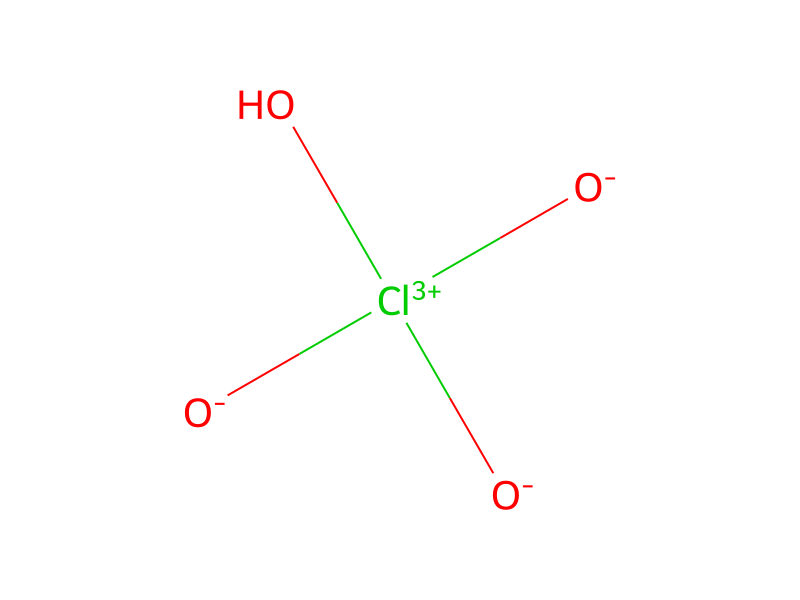

Product 1

Reagents, catalysts & solvents 1

Conditions
- Temperature
- 100 °C
Procedure
1.093 g (3.582 mmol) of 5-bromo-3-(2-methoxy-1-phenylvinyl)-2-pyridylamine was dissolved in 60 ml of anhydrous 1,4-dioxane. 800 μl of 70% aqueous perchloric acid was added and the mixture heated to 100° C. for 13 hours. The mixture was then cooled to room temperature and 3 ml of triethylamine was added and the mixture evaporated to dryness. The resulting crude was crystallized from hot ethanol to afford 763 mg (2.79 mmol, 78% yield) of 5-bromo-3-phenylpyrrolo[2,3-b]pyridine as a beige-brown to brown crystalline solid. 1H-NMR (d6-DMSO) δ: 12.19 [1H] s, 8.44 [1H] d, 8.34 [1H] d, 7.97 [1H] d, 7.72 [2H] d(m), 7.45 [2H] t, 7.27 [1H] t(m). MS: m/z 273 [MH+].
Workup
- temperatureThe mixture was then cooled to room temperature
- customthe mixture evaporated to dryness
- customThe resulting crude was crystallized from hot ethanol
Sources & evidence
- ORD record
- ord-be3f05598cbf43b3ae2d65498ea00491
- Source dataset
- uspto-grants-2009_10
- Patent number
- US07601839B2
Reaction notes
Loading…