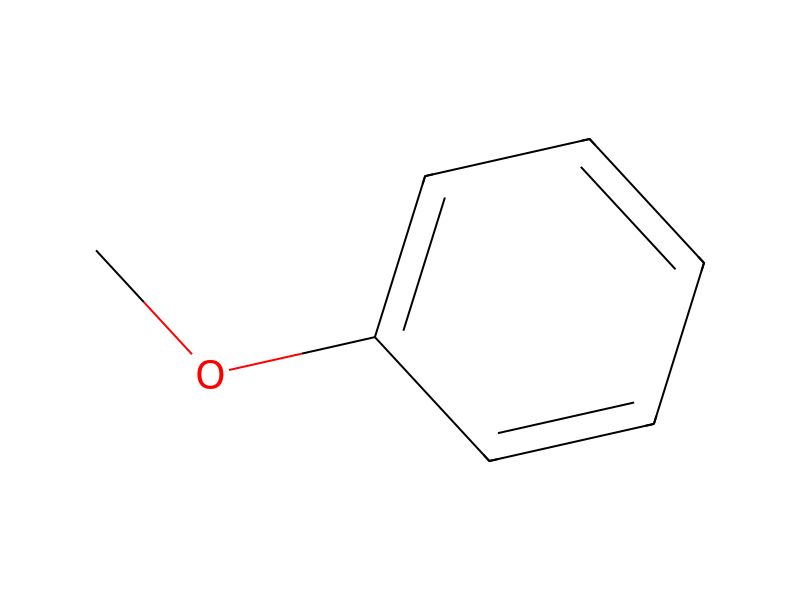
Anisole → HCID 68812412, compound
Reaction equation

C1(OC)C=CC=CC=1.[N+:9]([C:12]1[CH:28]=[CH:27][C:15]2[O:16][C:17]3[C:23]([N+:24]([O-])=O)=[CH:22][CH:21]=[CH:20][C:18]=3[O:19][C:14]=2[CH:13]=1)([O-])=O.[H][H]>[Pd].C1COCC1>[NH2:9][C:12]1[CH:28]=[CH:27][C:15]2[O:16][C:17]3[C:23]([NH2:24])=[CH:22][CH:21]=[CH:20][C:18]=3[O:19][C:14]=2[CH:13]=1Participants
6
Reactant 3


Product 1

Reagents, catalysts & solvents 2


Procedure
To a mixture of 1000 ml of anisole and 1000 ml of THF were added 81 g (0.295 mole) of 2,6-dinitrodibenzodioxin and 25 g of 10% palladium/carbon and hydrogen gas was passed through the mixture for 8 hours at room temperature with stirring. The 10% palladium/carbon was filtered and rinsed with THF. The filtrate and the rinsings were mixed, concentrated, and dried under reduced pressure to give 61.9 g (0.289 mole) of 2,6-diaminodibenzodioxin in a 98.0% yield. The product showed a purity of 94.2 area % (HPLC, 254 nm).
Workup
- filtrationThe 10% palladium/carbon was filtered
- washrinsed with THF
- additionThe filtrate and the rinsings were mixed
- concentrationconcentrated
- customdried under reduced pressure
Sources & evidence
- ORD record
- ord-67679a53913841409d1ac5750605d5b7
- Source dataset
- uspto-grants-2009_10
- Patent number
- US07605277B2
Reaction notes
Loading…