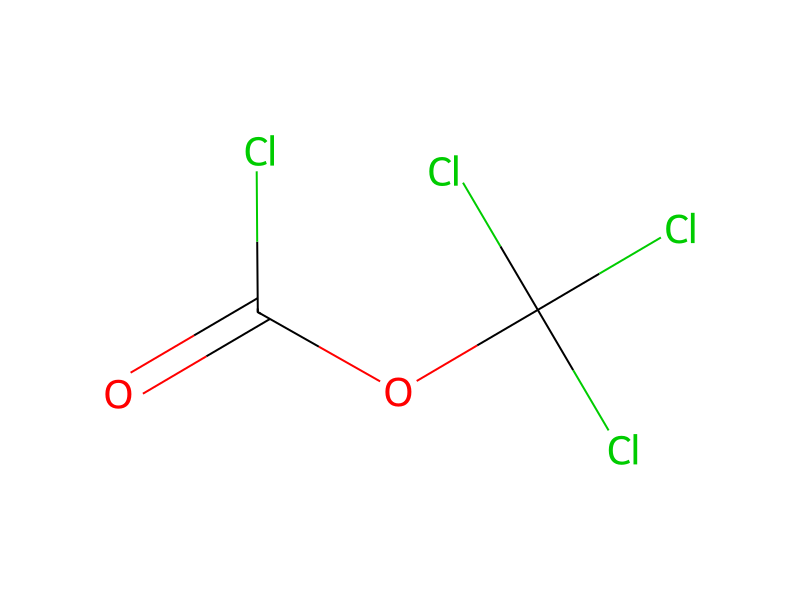
Diphosgene → HCID 86760970, compound
Reaction equation

[F:1][C:2]1[CH:3]=[C:4]([NH:8][C:9]2[N:18]=[CH:17][CH:16]=[CH:15][C:10]=2[C:11]([O:13][CH3:14])=[O:12])[CH:5]=[CH:6][CH:7]=1.ClC(OC(Cl)(Cl)Cl)=[O:21]>ClCCCl>[F:1][C:2]1[CH:3]=[C:4]([N:8]2[C:9]3[N:18]=[CH:17][CH:16]=[CH:15][C:10]=3[C:11](=[O:12])[O:13][C:14]2=[O:21])[CH:5]=[CH:6][CH:7]=1Participants
4
Reactant 2

Product 1

Reagents, catalysts & solvents 1

Procedure
To a solution of methyl 2-(3-fluorophenylamino)-nicotinate (4.90 g, 16.2 mmol; synthesized according to WO, A, 01/42244) in 1,2-dichloroethane (80 ml ) was added at 80° C. trichloromethyl chloroformate (also called: diphosgene, 5.9 ml, 48.3 mmol) gradually dropwise over about 30 minutes. Three hours later, activated carbon (130 mg) was added, and the mixture was heated under reflux for 30 minutes, filtered off, and then evaporated. The resultant residue was washed with isopropyl ether, and dried to give 1-(3-fluorophenyl)-2H-pyrido[2,3-d][1,3]oxazin-2,4(1H)-dione(3.42g, 82%) as crystals.
Workup
- additionThree hours later, activated carbon (130 mg) was added
- temperaturethe mixture was heated
- temperatureunder reflux for 30 minutes
- filtrationfiltered off
- customevaporated
- washThe resultant residue was washed with isopropyl ether
- customdried
Sources & evidence
- ORD record
- ord-92df26ef4472433a95920249b3cb5908
- Source dataset
- uspto-grants-2009_10
- Patent number
- US07608716B2
Reaction notes
Loading…