2-Fluoroaniline → 2-Fluoro-4-(1-bromo-1,1,2,3,3,3-hexafluoro-2-propyl)aniline
Reaction equation

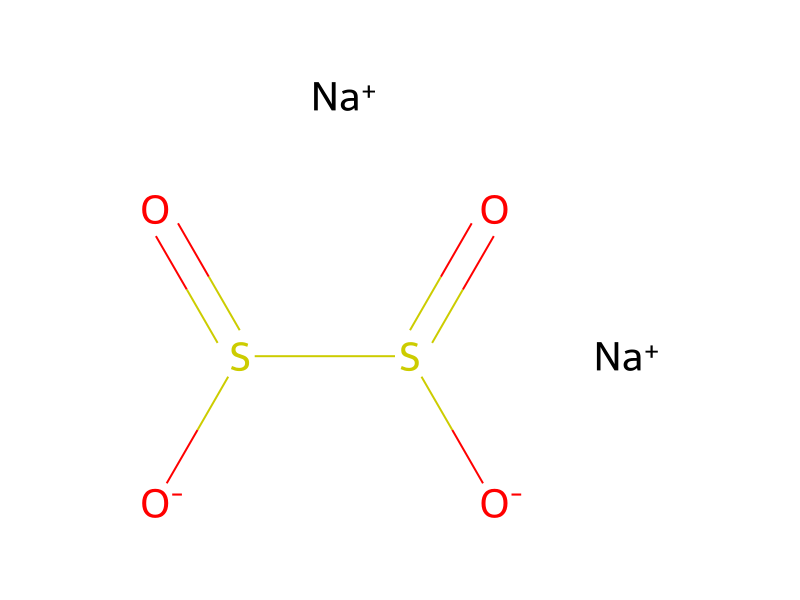
S(S([O-])=O)([O-])=O.[Na+].[Na+].[F:9][C:10]1[CH:16]=[CH:15][CH:14]=[CH:13][C:11]=1[NH2:12].C(=O)([O-])O.[Na+].[Br:22][C:23]([F:32])([F:31])[C:24](Br)([F:29])[C:25]([F:28])([F:27])[F:26].C(=O)([O-])[O-].[Na+].[Na+]>S([O-])(O)(=O)=O.C([N+](CCCC)(CCCC)CCCC)CCC.COC(C)(C)C.O>[F:9][C:10]1[CH:16]=[C:15]([C:24]([F:29])([C:25]([F:28])([F:27])[F:26])[C:23]([Br:22])([F:32])[F:31])[CH:14]=[CH:13][C:11]=1[NH2:12]Participants
9
Reactant 5




Product 1

Reagents, catalysts & solvents 3



Procedure
First 195.86 g (1.12 mol) of sodium dithionite and then 50 g (0.45 mol) of 2-fluoroaniline were added at room temperature to a mixture of 450 ml of water, 225 ml of tert-butyl methyl ether, 94.50 (1.12 mol) of sodium hydrogencarbonate and 18.33 g of tetra-n-butylammonium hydrogensulphate. Subsequently, a solution of 348.54 g of 1,2-dibromo-1,1,2,3,3,3-hexafluoropropane in 200 ml of tert-butyl methyl ether was added dropwise at 35–40° C. and, on completion of addition, the mixture was stirred at RT overnight. Sodium carbonate was used to adjust to a pH of 5 and the organic phase was removed, dried and concentrated.
Workup
- customthe organic phase was removed
- customdried
- concentrationconcentrated
Sources & evidence
- ORD record
- ord-adc583f09e2c4e36a91fb99785c43650
- Source dataset
- uspto-grants-2006_05
- Patent number
- US07041852B2
Reaction notes
Loading…