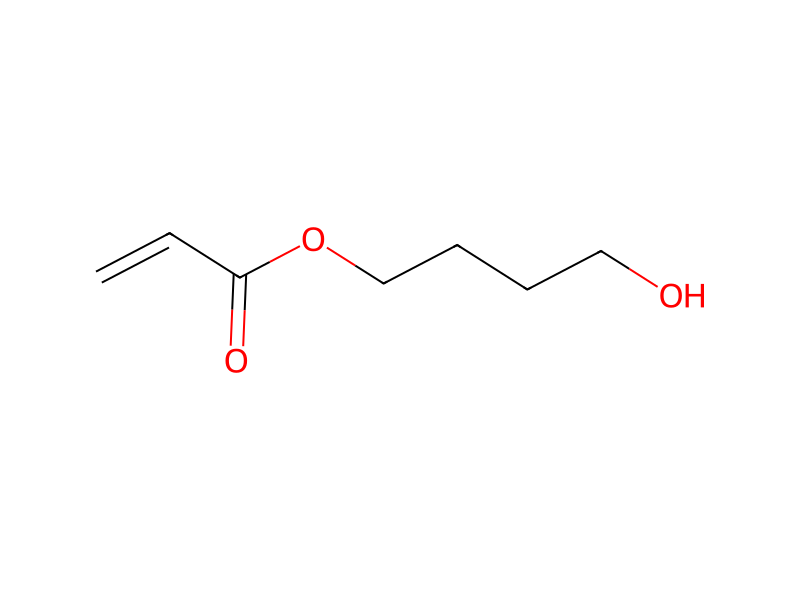
Hydroquinone → 4-Hydroxybutyl acrylate
Reaction equation

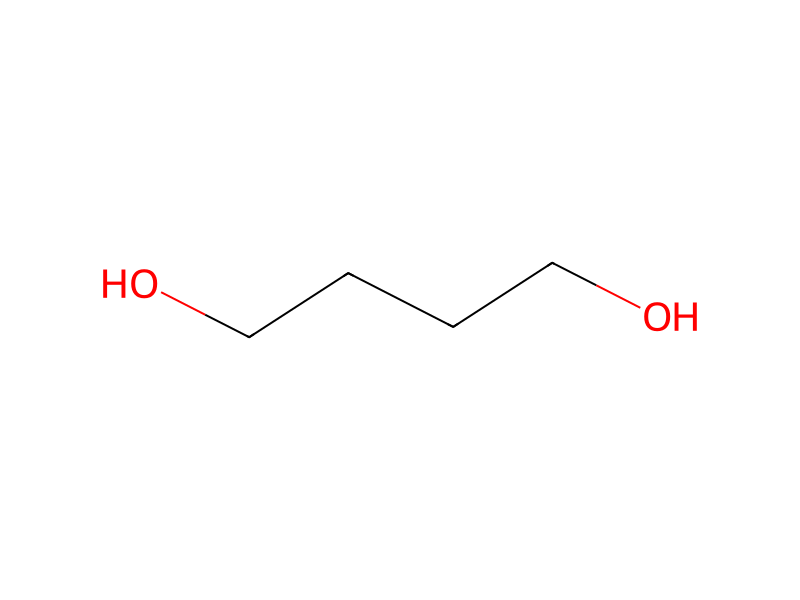
[CH2:1]([OH:6])[CH2:2][CH2:3][CH2:4][OH:5].[C:7](O)(=[O:10])[CH:8]=[CH2:9].S(=O)(=O)(O)O.C1(C=CC(O)=CC=1)O.C1(C)C=CC=CC=1>>[C:7]([O:5][CH2:4][CH2:3][CH2:2][CH2:1][OH:6])(=[O:10])[CH:8]=[CH2:9]Participants
6




Procedure
Two mols of 1,4-butanediol, 2 mols of acrylic acid, 0.1 ml of sulfuric acid and 0.001 mol of hydroquinone were dissolved in 100 mol of toluene, and the solution was refluxed for 4 hours while removing water generated. After the completion of the reaction, the solvent was distilled off under reduced pressure, and the residue was purified through silica gel column chromatography using acetone as an eluent to obtain 4-hydroxybutyl acrylate. One mol of 4-hydroxybutyl acrylate obtained, 1 mol of catechol and 1 mol of borane were reacted in dichloromethane at room temperature, and 1 mol of LiBr was further added and dissolved to obtain a desired compound.
Workup
- temperaturethe solution was refluxed for 4 hours
- customwhile removing water
- customAfter the completion of the reaction
- distillationthe solvent was distilled off under reduced pressure
- customthe residue was purified through silica gel column chromatography
Sources & evidence
- ORD record
- ord-a70d019591a54dacaed9e363d9b45f9a
- Source dataset
- uspto-grants-2006_05
- Patent number
- US07045242B2
Reaction notes
Loading…