1,10-Phenanthroline → 4-[7-(2-Chloro-4,6-dimethylphenyl)-2-methyl-4,5,6,7-tetrahydro-2H-pyrazolo[3,4-b]pyridin-3-yl]heptan-4-ol
Reaction equation

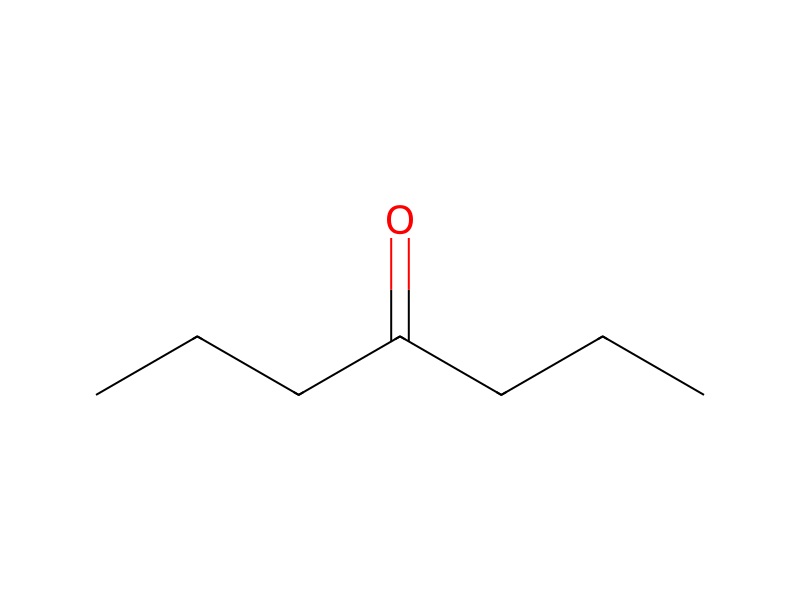
Br[C:2]1[N:3]([CH3:20])[N:4]=[C:5]2[C:10]=1[CH2:9][CH2:8][CH2:7][N:6]2[C:11]1[C:16]([CH3:17])=[CH:15][C:14]([CH3:18])=[CH:13][C:12]=1[Cl:19].N1C2C(=CC=C3C=2N=CC=C3)C=CC=1.C([Li])CCC.[CH3:40][CH2:41][CH2:42][C:43](=[O:47])[CH2:44][CH2:45][CH3:46]>O1CCCC1.C1CCCCC1>[Cl:19][C:12]1[CH:13]=[C:14]([CH3:18])[CH:15]=[C:16]([CH3:17])[C:11]=1[N:6]1[CH2:7][CH2:8][CH2:9][C:10]2=[C:2]([C:43]([OH:47])([CH2:44][CH2:45][CH3:46])[CH2:42][CH2:41][CH3:40])[N:3]([CH3:20])[N:4]=[C:5]12Participants
Reactant 4



Product 1

Reagents, catalysts & solvents 2


Conditions
- Temperature
- -78 °C
Procedure
3-Bromo-7-(2-chloro-4,6-dimethylphenyl)-2-methyl-4,5,6,7-tetrahydro-2H-pyrazolo[3,4-b]pyridine (122 mg) and a crystal of 1,10-phenanthroline were dissolved in 3 mL of dry tetrahydrofuran and the solution was chilled to −78° C. under an atmosphere of argon. Then nbutyllithium (2.0 M in cyclohexane) was added until the dark color of the organolithium/phenanthroline complex persisted. An additional 0.17 mL of the butyllithium solution then was added. After 10 min, a solution of 4-heptanone (42.6 mg) in 1 mL tetrahydrofuran was added via syringe. The reaction mixture was allowed to stir at −78° C. for 15 min, then was allowed to warm to 0° C. After quenching with aqueous ammonium chloride, the reaction mixture was partitioned between ethyl acetate and brine. The ethyl acetate was dried with magnesium sulfate and concentrated on the rotary evaporator. The residue was chromatographed on silica gel eluting with 9:1 hexane/acetone to provide 76.0 mg of 4-[7-(2-chloro-4,6-dimethylphenyl)-2-methyl-4,5,6,7-tetrahydro-2H-pyrazolo-[3,4-b]pyridin-3-yl]heptan-4-ol, which was recrystallized from hexane, mp 129–130 ° C.
Workup
- temperatureto warm to 0° C
- customAfter quenching with aqueous ammonium chloride
- customthe reaction mixture was partitioned between ethyl acetate and brine
- dry with materialThe ethyl acetate was dried with magnesium sulfate
- concentrationconcentrated on the rotary evaporator
- customThe residue was chromatographed on silica gel eluting with 9:1 hexane/acetone
Sources & evidence
- ORD record
- ord-085e4d22505f4442916eccb2b2861b51
- Source dataset
- uspto-grants-2006_05
- Patent number
- US07053103B2
Reaction notes
Loading…