Water → 2-Methylpentanedinitrile
Reaction equation

[C:1]([O-:4])(=[O:3])[CH3:2].[Ca+2].[C:6]([O-:9])(=[O:8])[CH3:7].[CH3:10][CH:11]([CH2:14][CH2:15][C:16]#[N:17])[C:12]#[N:13].C[NH:19][C:20](=[O:23])[CH2:21][CH3:22].[OH2:24]>Cl>[CH3:10][CH:11]([CH2:14][CH2:15][C:16]#[N:17])[C:12]#[N:13].[NH4+:19].[C:12]([CH:11]([CH3:14])[CH2:10][CH2:2][C:1]([O-:4])=[O:3])#[N:13].[NH4+:13].[NH4+:13].[CH3:22][CH:21]([CH2:1][CH2:7][C:6]([O-:9])=[O:8])[C:20]([O-:23])=[O:24]Participants
Reactant 4

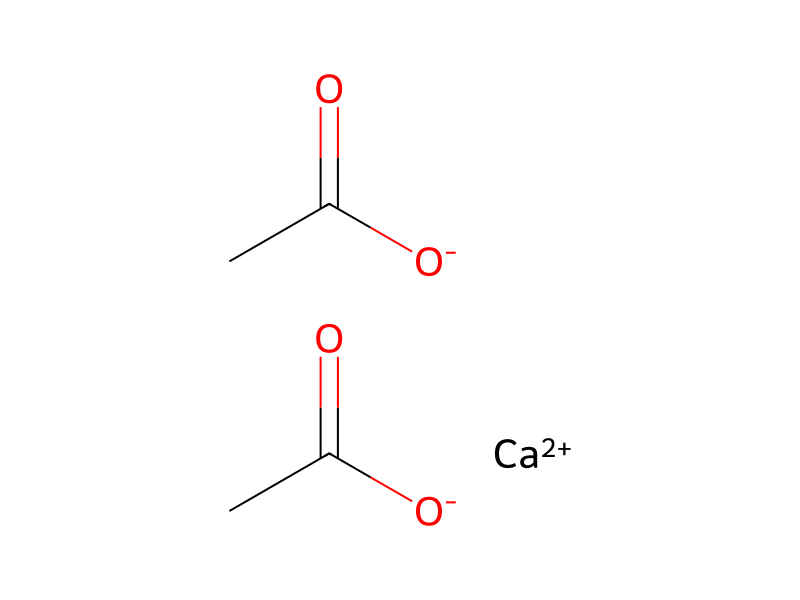


Product 3


Reagents, catalysts & solvents 1

Conditions
- Temperature
- 30 °C
Procedure
Into a 125 mL jacketed reaction vessel (temperature-controlled at 30° C. with a recirculating temperature bath) was placed 16.5 g of E. coli SW91/alginate beads prepared as described in Example 10. To the reaction vessel was added 68.25 mL of water, 1.0 mL of 0.20 M calcium acetate buffer (pH 7.0), and 14.25 mL (13.54 g, 1.25 M) of 2-methyglutaronitrile, and the mixture stirred at 30° C. Samples (0.100 mL) were mixed with 0.400 mL of water, then 0.360 mL of the diluted sample was mixed with 0.040 mL of 0.75 M N-methylpropionamide in water and 0.020 mL of 6.0 N HCl. The resulting mixture was filtered (0.22 μm) and the filtrate analyzed by HPLC for 2-methylgluratonitrile, 4-cyanopentanoic acid and 2-methlglutaric acid. The rate of production of 4-cyanopentanoic acid was 739 mM/h, and the reaction was complete in less than 2.5 h. At complete conversion of 2-methylglutaronitrile, the yields of 4-cyanopentanoic acid ammonium salt and 2-methylglutaric acid diammonium salt were 98.5% and 1.5% yields, respectively.
Workup
- customreaction vessel (temperature-controlled at 30° C. with a recirculating temperature bath)
- filtrationThe resulting mixture was filtered (0.22 μm)
- waitthe reaction was complete in less than 2.5 h
Sources & evidence
- ORD record
- ord-c4ef46bb475b4a7aa8a4d50994597973
- Source dataset
- uspto-grants-2006_06
- Patent number
- US07056709B2
Reaction notes
Loading…