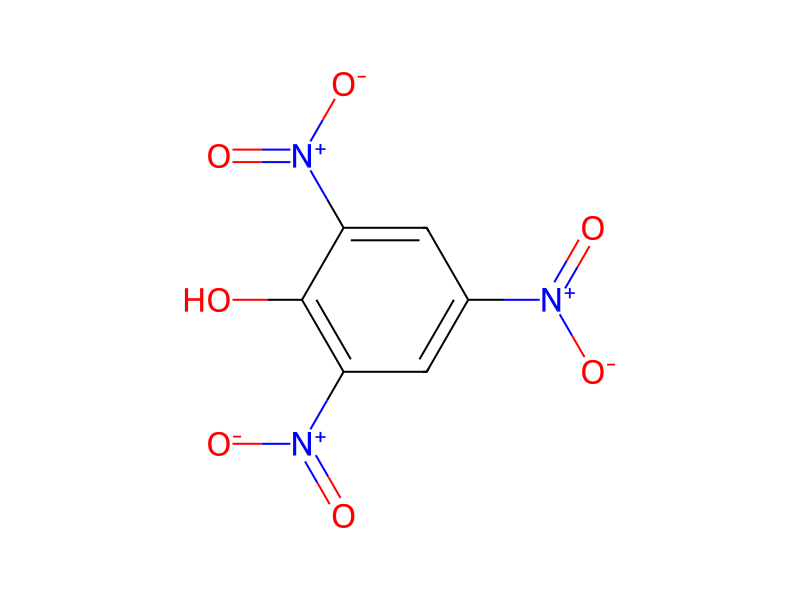
Picric Acid → 2,4,6-Trinitroaniline
Reaction equation

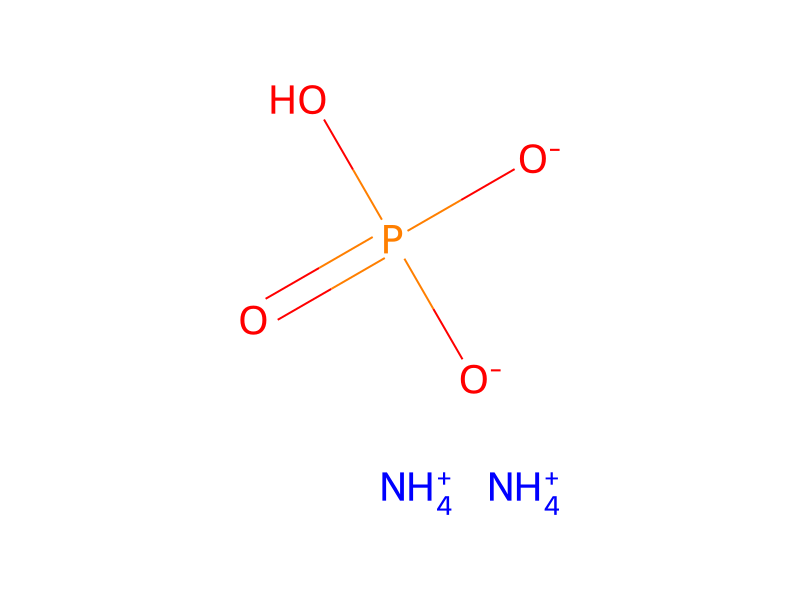
[C:1]1([C:15](O)=[C:11]([N+:12]([O-:14])=[O:13])[CH:10]=[C:6]([N+:7]([O-:9])=[O:8])[CH:5]=1)[N+:2]([O-:4])=[O:3].P([O-])([O-])(O)=O.[NH4+:22].[NH4+].S1(CCCC1)(=O)=O>O>[CH:5]1[C:1]([N+:2]([O-:4])=[O:3])=[C:15]([NH2:22])[C:11]([N+:12]([O-:14])=[O:13])=[CH:10][C:6]=1[N+:7]([O-:9])=[O:8]Participants
5
Reactant 3

Product 1

Reagents, catalysts & solvents 1

Conditions
- Temperature
- 100 °C
Procedure
Picric acid (10.0 g, 43.8 mmol), diammonium hydrogen phosphate (11.6 g, 87.6 mmol) and dry sulfolane (40 ml) are placed in a glass-lined, stainless steel reactor to form a 1.1M concentration reaction slurry. The reactor is sealed and the reaction slurry is stirred with heating for 2 hr as the temperature increases from 25 to 175° C. (20 psi pressure). The temperature is maintained at 175° C. and stirring is continued for an additional 20 hr. The cooled reaction mixture is mixed with water (400 ml) and the insoluble material is collected, washed with water and dried to produce picramide in 93% yield (Table 2, entry 5).
Workup
- customto form
- concentrationa 1.1M concentration reaction slurry
- customThe reactor is sealed
- temperaturewith heating for 2 hr as the temperature
- temperatureThe temperature is maintained at 175° C.
- stirringstirring
- customThe cooled reaction mixture
- customthe insoluble material is collected
- washwashed with water
- customdried
Sources & evidence
- ORD record
- ord-effe549dd00b4d0e9d78513e05fad0c6
- Source dataset
- uspto-grants-2006_06
- Patent number
- US07057072B2
Reaction notes
Loading…