Propargyl alcohol → 3,3'-(Pyridine-2,6-diyl)di(prop-2-yn-1-ol)
Reaction equation

[CH2:1]([OH:4])[C:2]#[CH:3].Br[C:6]1[CH:11]=[CH:10][CH:9]=[C:8](Br)[N:7]=1>C(N(CC)CC)C.C1C=CC([P]([Pd]([P](C2C=CC=CC=2)(C2C=CC=CC=2)C2C=CC=CC=2)([P](C2C=CC=CC=2)(C2C=CC=CC=2)C2C=CC=CC=2)[P](C2C=CC=CC=2)(C2C=CC=CC=2)C2C=CC=CC=2)(C2C=CC=CC=2)C2C=CC=CC=2)=CC=1>[OH:4][CH2:1][C:2]#[C:3][C:6]1[CH:11]=[CH:10][CH:9]=[C:8]([C:3]#[C:2][CH2:1][OH:4])[N:7]=1Participants
5
Reactant 2

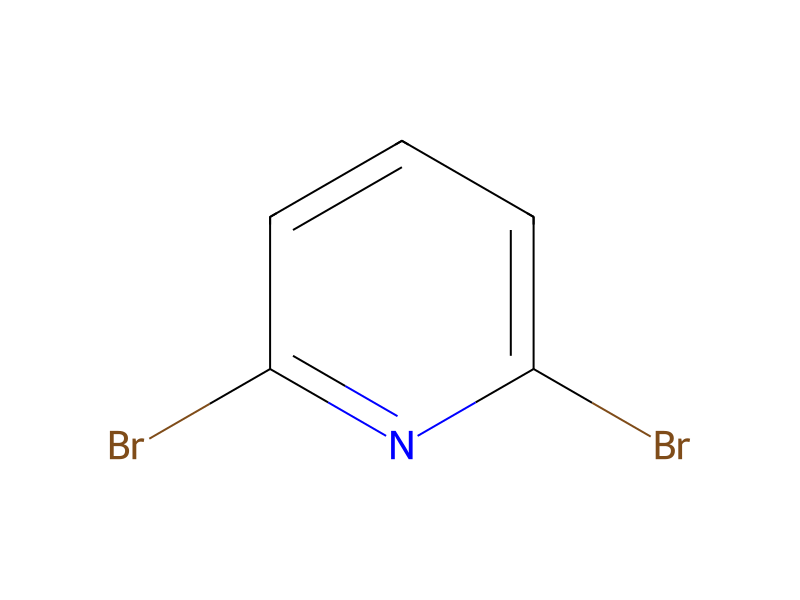
Product 1

Reagents, catalysts & solvents 2


Procedure
Pd(Ph3P)4 (99 mg, 2%), CuBrSMe2 (38 mg) and propargyl alcohol (1.3 ml, 21 mmol) are added successively to a solution of 2,6-dibromopyridine (5.0 g, 21.1 mmol) in triethylamine (120 ml), and the mixture is stirred at RT for 10 min and then under reflux at 80° C. for 2 h. After cooling, the reaction mixture is filtered off through kieselguhr, and the filter cake is washed with ethyl acetate (20 ml). The organic phase is concentrated under reduced pressure. Further purification is carried out by chromatography [toluene/acetone (7:3)] on a silica gel column. This gives the title compound (2.65 g) as a colorless solid. TLC, silica gel (glass plates) [toluene/acetone (7:3)], Rf=0.15.
Workup
- temperatureunder reflux at 80° C. for 2 h
- temperatureAfter cooling
- filtrationthe reaction mixture is filtered off through kieselguhr
- washthe filter cake is washed with ethyl acetate (20 ml)
- concentrationThe organic phase is concentrated under reduced pressure
- customFurther purification
Sources & evidence
- ORD record
- ord-fbc4ad8d0d0a466e84e6063d5e58290b
- Source dataset
- uspto-grants-2006_06
- Patent number
- US07060716B2
Reaction notes
Loading…