Methyl Acrylate → HCID 22050195, compound
Reaction equation

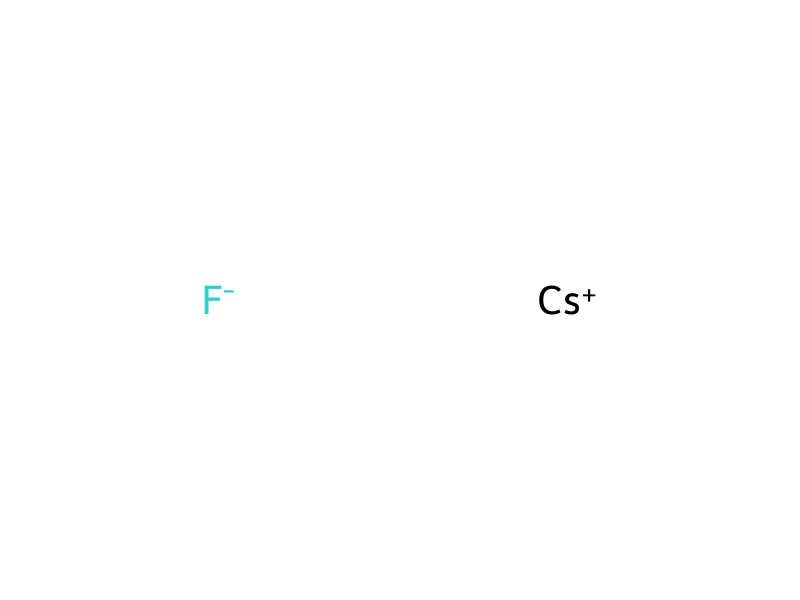
[Br:1][C:2]1[C:3](=[O:19])[NH:4][C:5](C)=[CH:6][C:7]=1[O:8][CH2:9][C:10]1[CH:15]=[CH:14][C:13](F)=[CH:12][C:11]=1F.[F-].[Cs+].CO[Si](OC)(OC)OC.[C:31]([O:35][CH3:36])(=[O:34])[CH:32]=[CH2:33]>O1CCCC1>[CH2:9]([O:8][C:7]1[CH:6]=[CH:5][N:4]([CH2:33][CH2:32][C:31]([O:35][CH3:36])=[O:34])[C:3](=[O:19])[C:2]=1[Br:1])[C:10]1[CH:11]=[CH:12][CH:13]=[CH:14][CH:15]=1Participants





Procedure
3-bromo-4-[(2,4-difluorobenzyl)oxy]-6-methylpyridin-2(1H)-one (5.00 g, 17.85 mmol) and cesium fluoride (0.27 g, 1.78 mmol) were suspended in tetrahydrofuran (50 mL) followed by dropwise addition of tetramethylortho silicate (2.70 g, 17.85 mmol) at room temperature. After stirring for 10 minutes at room temperature, methyl acrylate (2.00 g, 23.20 mmol) was added dropwise and the reaction stirred at room temperature for 48 hours. The reaction mixture was filtered through a pad of Celite®. The filtrate was concentrated and the resulting residue subjected to chromatography (silica gel, ethyl acetate with 10% methanol/hexanes) to afford a white solid (6.10 g, 93%). 1H NMR (400 MHz, CDCl3) δ 7.42 (d, J=7.65 Hz, 1H), 7.41-7.29 (m, 5H), 6.04 (d, J=7.65 Hz, 1H), 5.20 (s, 2H), 4.17 (t, J=5.91 Hz, 2H), 3.63 (s, 3H), 2.85 (t, J=5.91 Hz, 2H). ES-HRMS m/z 366.0350 (M+H C16H16BrNO4 requires 366.0335).
Workup
- stirringthe reaction stirred at room temperature for 48 hours
- filtrationThe reaction mixture was filtered through a pad of Celite®
- concentrationThe filtrate was concentrated
Sources & evidence
- ORD record
- ord-c05568444121457da07c25ab7664c7c1
- Source dataset
- uspto-grants-2006_06
- Patent number
- US07067540B2
Reaction notes
Loading…