Triethylenetetramine → Aniline
Reaction equation

[Cl:1][C:2]1[CH:3]=[C:4]([N+:9]([O-])=O)[CH:5]=[CH:6][C:7]=1[Cl:8].NCCNCCNCCN.[H][H]>[Pt].CO>[NH2:9][C:4]1[CH:5]=[CH:6][CH:7]=[CH:2][CH:3]=1.[Cl:8][C:7]1[CH:6]=[CH:5][C:4]([NH2:9])=[CH:3][CH:2]=1.[Cl:1][C:2]1[CH:3]=[C:4]([CH:5]=[CH:6][C:7]=1[Cl:8])[NH2:9]Participants
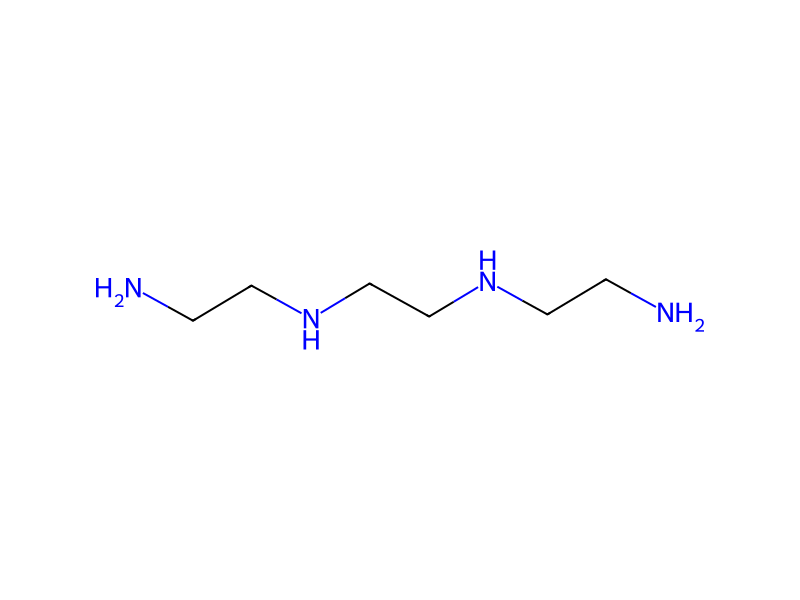







Conditions
- Temperature
- 100 °C
Procedure
100 g of 3,4-dichloronitrobenzene, 1 g of triethylenetetramine and 0.02g of 5% platinum on carbon were introduced into a SUS-32 eletromagnetic agitation type autoclave having an inner volume of 500 ml. After air in the autoclave was replaced by hydrogen, a hydrogen gas was further charged therein under a pressure of 20 kg/cm2G. The mixture was heated up to 100° C with agitation. Then, a hydrogen gas was further introduced into the autoclave until the pressure reached 50 kg/cm2G, and the mixture was reacted at 100° C. During the reaction, whenever the reaction pressure drops down to 30 kg/cm2G, fresh hydrogen gas was charged into the autoclave until the pressure of 50 kg/cm2 was restored. The hydrogen charging was repeated until absorption of hydrogen was no longer recognized. The reaction took about 150 minutes. After the absorption of hydrogen became unrecognizable, the reaction system was kept warm for 1 hour with agitation, at a temperature slightly higher than the reaction temperature, so as to complete the reaction. Then, the autoclave was cooled and the reaction product was discharged therefrom. To the reaction product was added the same amount of methanol to give a uniform solution. Thereafter, the catalyst was filtered out and the resultant product was analyzed by gaschromatography. The analysis revealed that the reaction product contained therein a trace (less than 0.01% by weight) of aniline which was produced by a dehalogenation reaction, 0.4% by weight of monochloroaniline and 98.5% by weight of 3,4 -dichloroaniline. The pH value of the resultant reaction liquid was within a range of 7 to 8 and no corrosion occurred to the reactor.
Workup
- customwas reacted at 100° C
- customDuring the reaction, whenever
- customthe reaction pressure
- additionwas charged into the autoclave until the pressure of 50 kg/cm2
- customThe hydrogen charging was repeated until absorption of hydrogen
- customAfter the absorption of hydrogen
- temperaturethe reaction system was kept warm for 1 hour with agitation, at a temperature slightly higher than the reaction temperature
- customthe reaction
- temperatureThen, the autoclave was cooled
- customto give a uniform solution
- filtrationThereafter, the catalyst was filtered out
Sources & evidence
- ORD record
- ord-9879211133594695a43491dd63d4c220
- Source dataset
- uspto-grants-1978_01
- Patent number
- US04070401
Reaction notes
Loading…