Methanol → HCID 22801482, compound
Reaction equation

[CH3:1][Si:2]([CH3:30])([CH3:29])[O:3][C@H:4]1[CH2:9][CH2:8][C@H:7]2[C@H:10]3[C@H:25]([CH2:26][CH2:27][C@:5]12[CH3:6])[C@:18]1([CH2:19][O:20][Si:21]([CH3:24])([CH3:23])[CH3:22])[C:13](=[CH:14][C:15](=[O:28])[CH2:16][CH2:17]1)[CH2:12][CH2:11]3.COC(OC)OC.C1(C)C=CC(S(O)(=O)=O)=CC=1.CO>O1CCCC1>[CH3:29][Si:2]([CH3:1])([CH3:30])[O:3][C@H:4]1[CH2:9][CH2:8][C@H:7]2[C@H:10]3[C@H:25]([CH2:26][CH2:27][C@:5]12[CH3:6])[C@:18]1([CH2:19][O:20][Si:21]([CH3:22])([CH3:23])[CH3:24])[C@H:13]([CH2:14][C:15](=[O:28])[CH2:16][CH2:17]1)[CH2:12][CH2:11]3Participants
Reactant 4


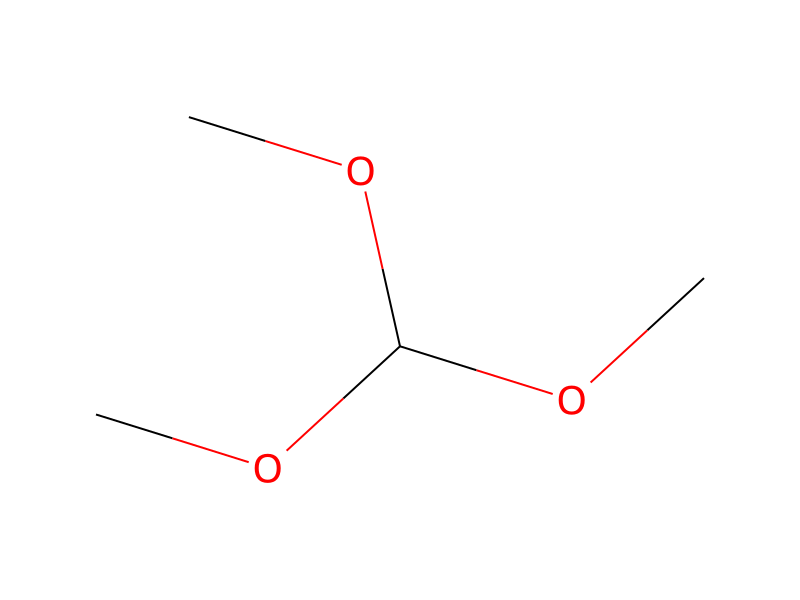

Product 1

Reagents, catalysts & solvents 1

Procedure
Hydrogenation of 19-hydroxy-5-androstenes by means of 10% palladium on charcoal results in good yields of the corresponding 19-hydroxy-5α-androstanes. Suitable steroid substrates which fulfill the 5-ene requirement for stereoselectivity during the reduction include 3β,19-dihydroxy-5-androstenes, 19-hydroxy-5-androsten-3-ones, 19-hydroxy-5-androsten-3-one 3-cyclic ethyleneketal and 3-alkoxy-3,5-androstadien-19-ols. Typical reduction conditions utilize 2-10parts of the steroid substrate to 1 part catalyst with methanol or ethanol as solvent and hydrogen pressures ranging from 1 to 3 atmospheres. In this manner 1β,17α-dimethyl-5-androstene-3β,17β,19-triol, 7α-methyl-19-tetrahydropyranyloxy-5-androsten-3β,17β-diol and 6α-methyl-3β,19-dihydroxy-5-androsten-17-one are reduced to 1β,17α-dimethyl-5α-androstane-3β,17β,19-triol, 7α-methyl-19-tetrahydropyranyloxy-5α-androstan-3β,17β-diol and 6α-methyl-3β,19-dihydroxy-5α-androstan-17-one, respectively. 19-Hydroxy-1α-methyl-4-androstene-3,17-dione is converted to its cyclic ethyleneketal by heating at reflux temperatures with p-toluenesulfonic acid and ethyleneglycol in benzene. The ketal which forms is then reduced and hydrolyzed to form 19-hydroxy-1α-methyl-5α-androstan-3,17-dione. 17β,19-Di(trimethylsiloxy)-4-androsten-3-one can be converted to the methyl enol ether by the action of trimethylorthoformate, p-toluenesulfonic acid and methanol in tetrahydrofuran. The 3-methoxy-3,5-diene which forms is then catalytically reduced to yield 17β,19-di(trimethylsiloxy)-5α-androstan-3-one. The ethylenol ether of 19-hydroxy-4-androsten-3,17-dione acetate can also be reduced to yield 19-hydroxy-5α -androstane-3,17-dione acetate.
Sources & evidence
- ORD record
- ord-53ca1df708e24f8aae1147d3b32f0afb
- Source dataset
- uspto-grants-1978_01
- Patent number
- US04071625
Reaction notes
Loading…