Water → HCID 12150713, compound
Reaction equation

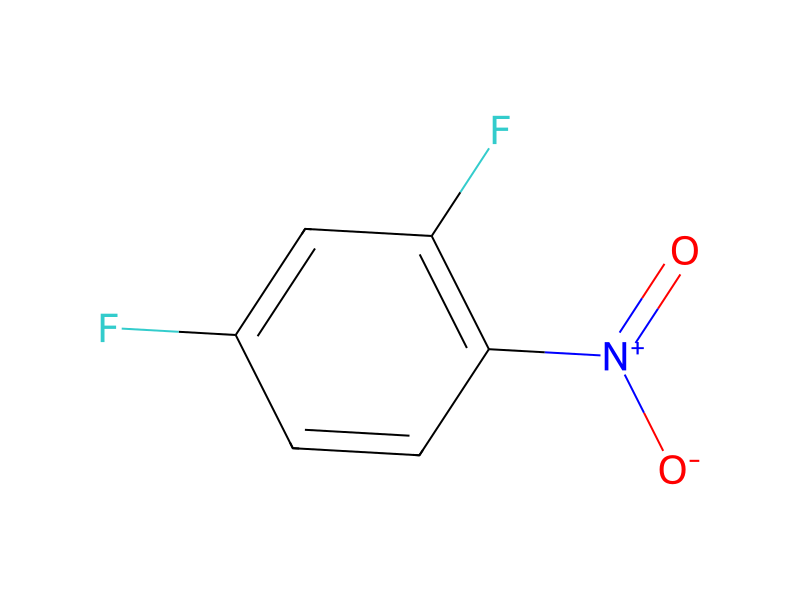
Cl.Cl.[N:3]1[CH:8]=[CH:7][CH:6]=[C:5]2[CH2:9][NH:10][CH2:11][C:4]=12.[F:12][C:13]1C=C(F)C=[CH:15][C:14]=1[N+]([O-])=O.CC[N:25]([CH:29]([CH3:31])[CH3:30])C(C)C.[OH2:32].CN(C=[O:37])C>>[F:12][C:13]1[CH:30]=[C:29]([N+:25]([O-:37])=[O:32])[CH:31]=[CH:15][C:14]=1[N:10]1[CH2:9][C:5]2[C:4](=[N:3][CH:8]=[CH:7][CH:6]=2)[CH2:11]1Participants
6





Conditions
- Temperature
- 60 °C
Procedure
To 6,7-dihydro-5H-pyrrolo[3,4-b]pyridine dihydrochloride salt (as described by Petersen, et al. (Bayer) EP0520277A2)(42.8 g, 222 mmols) in DMF (1.2 L) was added 2,4-difluoronitrobenzene (25 mL, 224 mmols). The mixture was heated to 60° C. and DIPEA (195 mL, 1.12 mols) was added dropwise from an addition funnel over 2 hrs. After heating overnight the reaction mixture was cooled to rt, poured into water (3 L), filtered and dried in a vacuum oven (50° C.) to provide a yellow-green solid (53.8 g, 94% yield). MS (M+1)=260 m/z.
Workup
- temperatureAfter heating overnight the reaction mixture
- temperaturewas cooled to rt
- filtrationfiltered
- customdried in a vacuum oven (50° C.)
Sources & evidence
- ORD record
- ord-5c9cf58cc73b48dfb4d268e0483a7bf3
- Source dataset
- uspto-grants-2004_08
- Patent number
- US06770664B2
Reaction notes
Loading…