1-Nitropropane → 5-Bromo-3-cyanoindole
Reaction equation

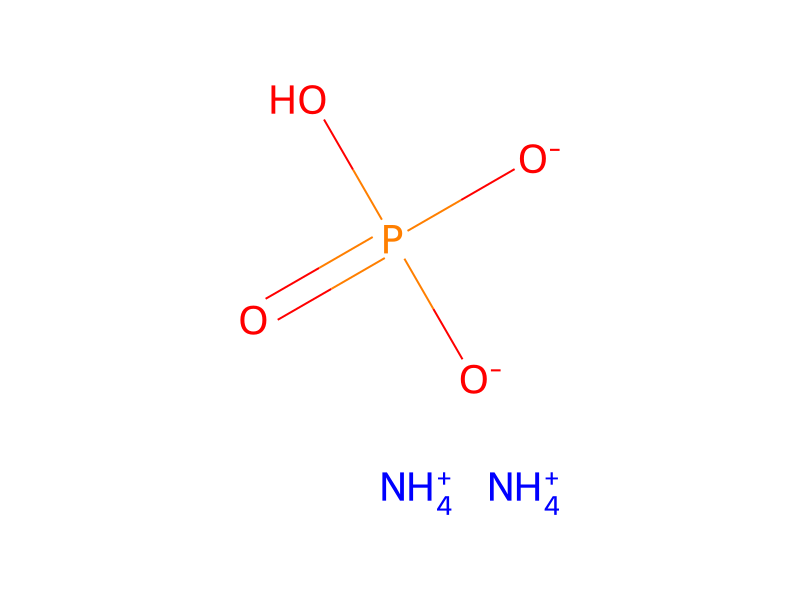
[Br:1][C:2]1[CH:3]=[C:4]2[C:8](=[CH:9][CH:10]=1)[NH:7][CH:6]=[C:5]2[CH:11]=O.P([O-])([O-])(O)=O.[NH4+].[NH4+].[N+:20](CCC)([O-])=O>C(O)(=O)C>[Br:1][C:2]1[CH:3]=[C:4]2[C:8](=[CH:9][CH:10]=1)[NH:7][CH:6]=[C:5]2[C:11]#[N:20]Participants
5
Reactant 3


Product 1

Reagents, catalysts & solvents 1

Procedure
Commercially available 5-bromoindole-3-carboxaldehyde (11.3 g, 50.4 mmol), ammonium hydrogen phosphate (47.0 g, 353 mmol), 1-nitropropane (4.49 g, 50.4 mmol), and glacial acetic acid (100 ml) were heated at a gentle reflux for 18 h. The resulting mixture was concentrated in vacuo and the residue mixed with 5 N sodium hydroxide (500 ml) and ice chips. The precipitate was collected by filtration and rinsed several times with water. The filtrate was concentrated in vacuo to afford 5-bromo-3-cyanoindole (7.23 g, 65%) as a dark solid. 1H-NMR (400 MHz, CDCl3) δ10.0 (1H, s), 8.68 (1H, br s), 8.51 (1H, s), 7.85 (1H, s), 7.43 (1H, dd, J=8.6, 1.9 Hz), 7.32 (1H, d, J=8.6 Hz).
Workup
- temperaturea gentle reflux for 18 h
- concentrationThe resulting mixture was concentrated in vacuo
- additionthe residue mixed with 5 N sodium hydroxide (500 ml) and ice chips
- filtrationThe precipitate was collected by filtration
- washrinsed several times with water
- concentrationThe filtrate was concentrated in vacuo
Sources & evidence
- ORD record
- ord-490b609657ec45c29d131f08860e41b4
- Source dataset
- uspto-grants-2004_08
- Patent number
- US06777437B2
Reaction notes
Loading…