Hydrogen Peroxide → 4-(Pyridin-2-yloxy)phenol
Reaction equation

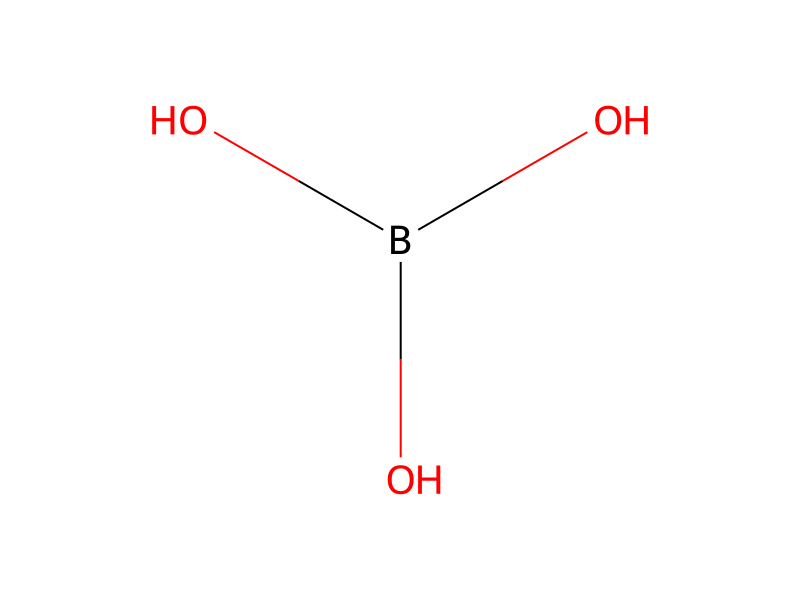
B(O)(O)O.[OH:5]O.S(=O)(=O)(O)O.[N:12]1[CH:17]=[CH:16][CH:15]=[CH:14][C:13]=1[O:18][C:19]1[CH:26]=[CH:25][C:22](C=O)=[CH:21][CH:20]=1>O1CCCC1>[N:12]1[CH:17]=[CH:16][CH:15]=[CH:14][C:13]=1[O:18][C:19]1[CH:26]=[CH:25][C:22]([OH:5])=[CH:21][CH:20]=1Participants
Reactant 4



Product 1

Reagents, catalysts & solvents 1

Conditions
- Temperature
- 60 °C
Procedure
Following Scheme I: To a 100 mL round-bottomed flask equipped with condenser and N2 inlet were added 3.1 g (50.2 mmol) boric acid, 10 mL tetrahydrofuran, 2.3 mL (20 mmol) 30% hydrogen peroxide, and 1 mL concentrated sulfuric acid. To the reaction was added a solution of 2.0 g (10 mmol) 4-(pyridin-2-yloxy)-benzaldehyde in 10 mL tetrahydrofuran dropwise over 5 minutes. The reaction was stirred 3 hr at 60° C., cooled, filtered, and the filtrate neutralized with saturated aqueous sodium bicarbonate solution. The mixture was extracted into 2× ethyl acetate, and the organic layer washed with brine, dried over sodium sulfate, and evaporated. The residue was chromatographed on silica gel using hexane/ethyl acetate as eluant to afford 180 mg (9.6%) of the product as a solid.
Workup
- customTo a 100 mL round-bottomed flask equipped with condenser and N2 inlet
- temperaturecooled
- filtrationfiltered
- extractionThe mixture was extracted into 2× ethyl acetate
- washthe organic layer washed with brine
- dry with materialdried over sodium sulfate
- customevaporated
- customThe residue was chromatographed on silica gel
Sources & evidence
- ORD record
- ord-44bb32691a94416ba1d3abe808a842d6
- Source dataset
- uspto-grants-2004_08
- Patent number
- US06784299B2
Reaction notes
Loading…