Methanol → 2-Chloro-4,6-dimethoxy-1,3,5-triazine
Reaction equation

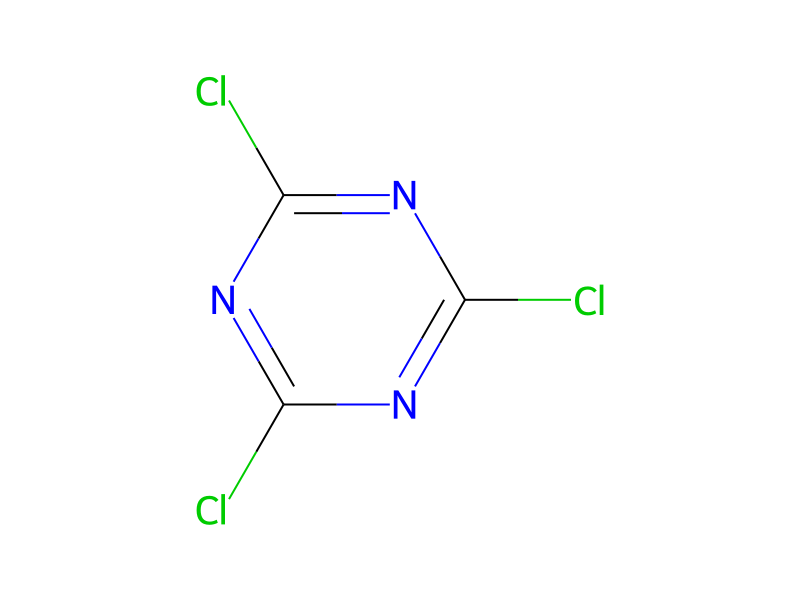
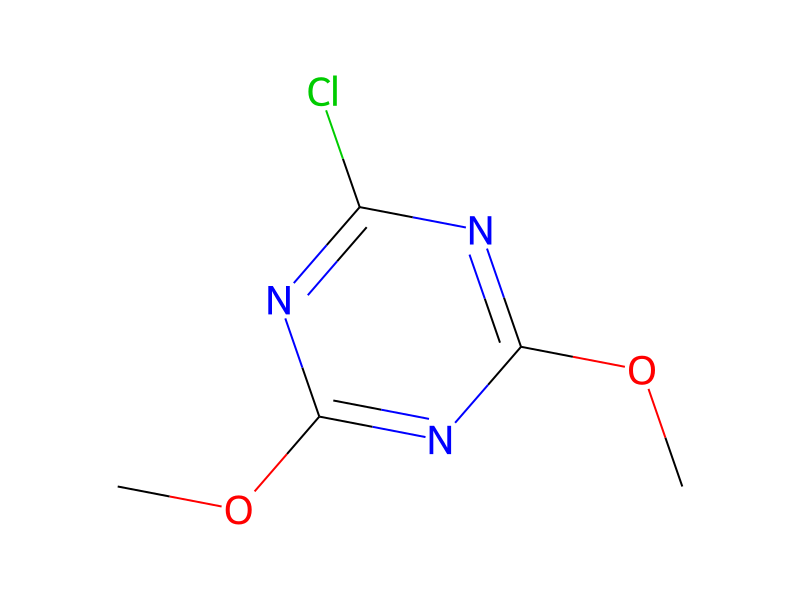
[C:1](=[O:4])([O-])O.[K+].[CH3:6][OH:7].[N:8]1[C:15](Cl)=[N:14][C:12](Cl)=[N:11][C:9]=1[Cl:10]>C(OCC)(=O)C>[Cl:10][C:9]1[N:11]=[C:12]([O:7][CH3:6])[N:14]=[C:15]([O:4][CH3:1])[N:8]=1Participants
Reactant 3


Product 1
Reagents, catalysts & solvents 1

Conditions
- Temperature
- 10 °C
Procedure
In a 1-liter (1000-ml) four-necked flask equipped with a stirrer and a thermometer, 52.6 g (0.525 mol) of potassium hydrogencarbonate, 80.1 g (5.0 mol, water content: 530 ppm) of methanol and 100 ml of ethyl acetate were placed. With stirring at a temperature of not higher than 10° C., 46.1 g (0.25 mol) of cyanuric chloride was added, followed by stirring at 20° C. for 1 hour. Then, the reaction solution was refluxed at 62° C. for 6 hours. The weight of the reaction solution from which a salt formed had been removed was 202 g, and the water content was 46,300 ppm. Then, 150 ml of ethyl acetate and 200 ml of water were added, followed by liquid separation. The organic layer was washed with 200 ml of water and then vacuum concentrated to obtain 38.4 g of 2-chloro-4,6-dimethoxy-1,3,5-triazine as a white solid. The yield was 87.5%. From the gas chromatography analysis, the purity proved to be 93.8% (% by area).
Workup
- customIn a 1-liter (1000-ml) four-necked flask equipped with a stirrer
- stirringby stirring at 20° C. for 1 hour
- temperatureThen, the reaction solution was refluxed at 62° C. for 6 hours
- customThe weight of the reaction solution from which a salt formed
- customhad been removed
- additionThen, 150 ml of ethyl acetate and 200 ml of water were added
- customfollowed by liquid separation
- washThe organic layer was washed with 200 ml of water
- concentrationvacuum concentrated
Sources & evidence
- ORD record
- ord-0b562a4a904f473bb7184330d776dc99
- Source dataset
- uspto-grants-2004_01
- Patent number
- US06673922B2
Reaction notes
Loading…