Tetrahydrofuran → HCID 13433423, compound
Reaction equation

[Br:1][C:2]1[CH:3]=[CH:4][C:5](SC(C)C)=[N:6][CH:7]=1.O[O:13][S:14]([O-:16])=O.[K+].C(=O)(O)[O-].[Na+].O1C[CH2:26][CH2:25][CH2:24]1>CO>[Br:1][C:2]1[CH:3]=[CH:4][C:5]([S:14]([CH:25]([CH3:26])[CH3:24])(=[O:16])=[O:13])=[N:6][CH:7]=1Participants
6
Reactant 4



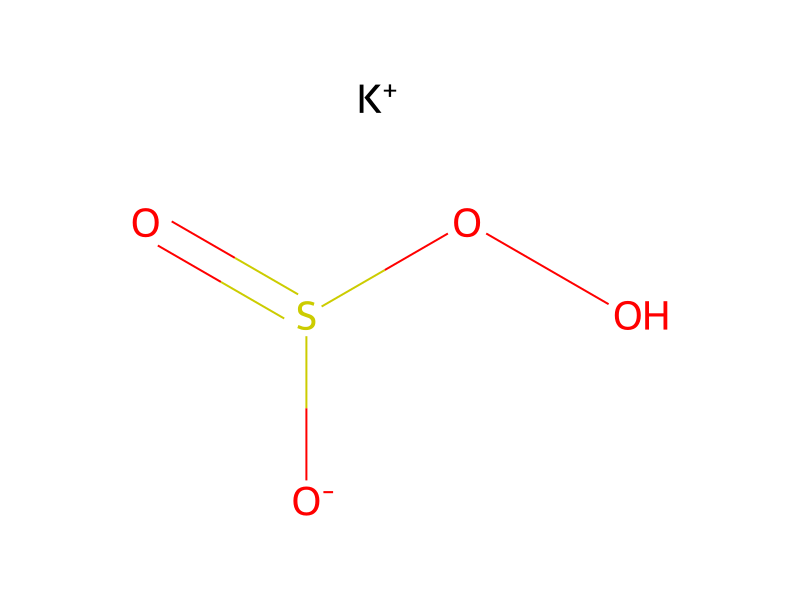
Product 1

Reagents, catalysts & solvents 1

Procedure
To a solution of 5-bromo-2-isopropylthiopyridine from Step 1 (2.03 g, 8.75 mmol) in tetrahydrofuran (50 ml) and methanol (25 ml) at 0° C. was added oxone (15.8 g, 25.8 mmol) and then saturated aqueous sodium bicarbonate (25 ml). The resulting mixture was stirred at room temperature for 6 hours. The mixture was quenched with aqueous sodium bicarbonate and partitioned between ethyl acetate and water. The crude product from the organic phase was chromatographed on silica gel eluting with 20% ethyl acetate in hexane to afford the 5-Bromo-2-isopropylsulfonylpyridine compound as a white solid.
Workup
- customThe mixture was quenched with aqueous sodium bicarbonate
- custompartitioned between ethyl acetate and water
- customThe crude product from the organic phase was chromatographed on silica gel eluting with 20% ethyl acetate in hexane
Sources & evidence
- ORD record
- ord-cc982e757a9944968a545b51c55fbdbc
- Source dataset
- uspto-grants-2004_01
- Patent number
- US06677351B2
Reaction notes
Loading…