Hydrochloric Acid → 4-(3-Bromobenzyloxy)-3,5-diiodo-benzoic Acid 3-bromobenzyl Ester
Reaction equation

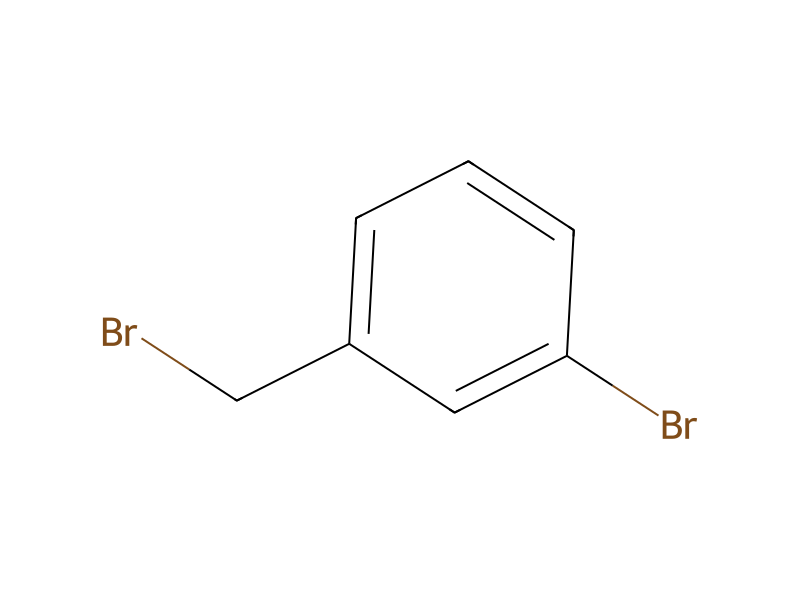
[I:1][C:2]1[CH:3]=[C:4]([CH:8]=[C:9]([I:12])[C:10]=1[OH:11])[C:5]([OH:7])=[O:6].[Br:13][C:14]1[CH:15]=[C:16]([CH:19]=[CH:20][CH:21]=1)[CH2:17]Br.C(=O)([O-])[O-].[Cs+].[Cs+].Cl>CN(C=O)C>[Br:13][C:14]1[CH:15]=[C:16]([CH:19]=[CH:20][CH:21]=1)[CH2:17][O:6][C:5](=[O:7])[C:4]1[CH:3]=[C:2]([I:1])[C:10]([O:11][CH2:17][C:16]2[CH:19]=[CH:20][CH:21]=[C:14]([Br:13])[CH:15]=2)=[C:9]([I:12])[CH:8]=1Participants
6





Procedure
A suspension of 3,5-diiodo-4-hydroxybenzoic acid (0.39 g, 1.0 mmol), 3-bromobenzyl bromide (0.62 g, 2.5 mmol), and cesium carbonate (0.98 g, 3.0 mmol) in 10 mL DMF was stirred for 15 hours at room temperature. The mixture was then poured into 1 M HCl (100 mL) and a white precipitate formed. The precipitate was isolated by filtration and was recrystallized from hot isopropanol/chloroform, yielding the title compound as bright white crystals (610 mg, 84%). 1H NMR (400 MHz, CDCl3): δ 8.51 (s, 2H), 7.88 (d, J=7.6 Hz, 1H), 7.62 (d, J=8 Hz, 1H), 7.58 (d, J=8.4 Hz, 1H), 7.47-7.34 (m, 3H), 7.26-7.21 (m, 2H), 5.44 (s, 2H), 5.15 (s, 2H). TLC (9:1 Hex:EtOAc), Rf 0.49.
Workup
- customa white precipitate formed
- customThe precipitate was isolated by filtration
- customwas recrystallized from hot isopropanol/chloroform
Sources & evidence
- ORD record
- ord-db06037470e74686b9e04c9ade50cc95
- Source dataset
- uspto-grants-2004_01
- Patent number
- US06677473B1
Reaction notes
Loading…