Sodium hydride → HCID 22724551, compound
Reaction equation

[H-].[Na+].[Br-].[N+:4]([C:7]1[CH:32]=[CH:31][C:10]([CH2:11][P+](C2C=CC=CC=2)(C2C=CC=CC=2)C2C=CC=CC=2)=[CH:9][CH:8]=1)([O-:6])=[O:5].[O:33]1[CH2:38][CH2:37][C:36](=O)[CH2:35][CH2:34]1>CS(C)=O>[N+:4]([C:7]1[CH:8]=[CH:9][C:10]([CH:11]=[C:36]2[CH2:37][CH2:38][O:33][CH2:34][CH2:35]2)=[CH:31][CH:32]=1)([O-:6])=[O:5]Participants
Reactant 3

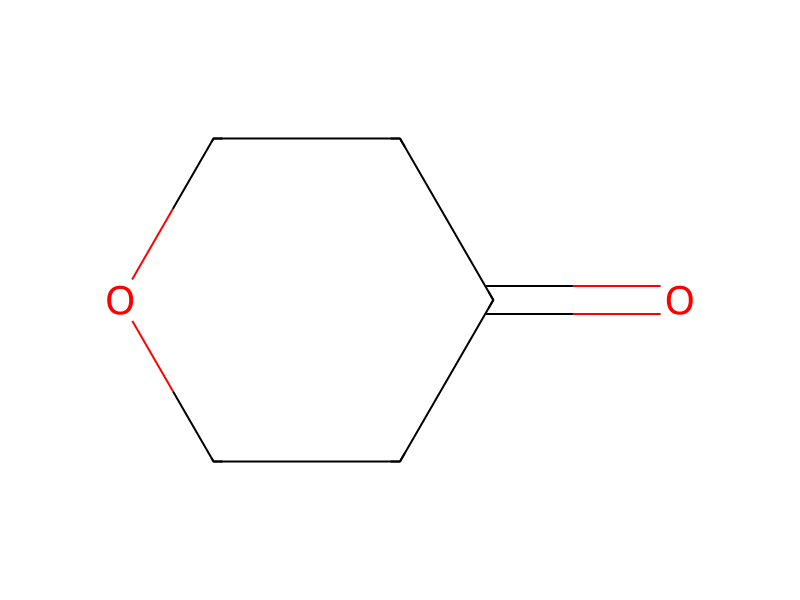

Product 1

Reagents, catalysts & solvents 1

Conditions
- Temperature
- 80 °C
Procedure
To a 500 mL 3-necked flask is added NaH (2.0 g of a 60% suspension in mineral oil) and 35 mL of DMSO. The resulting solution is heated at 80° C. for 1 h then cooled in an ice-water bath. To this is then added a solution of the (4-nitrobenzyl)(triphenyl)phosphonium bromide (23.92 g) in 200 mL warm DMSO. The mixture is stirred at room temperature for 1 h. Tetrahydro-4H-pyran-4-one (4.62 mL) is then added. The mixture is allowed to stir overnight at room temperature and then at 80° C. for 2 days. The mixture is poured over ice and extracted with Et2O. The combined organic extracts are dried and condensed. Chromatography (Biotage flash 40S, gradient from hexanes to 80% CH2Cl2/hexanes) yields 4.83 g (44%) of 4-(4-nitrobenzylidene)tetrahydro-2H-pyran as a solid.
Workup
- temperaturethen cooled in an ice-water bath
- stirringto stir overnight at room temperature
- waitat 80° C. for 2 days
- additionThe mixture is poured over ice
- extractionextracted with Et2O
- customThe combined organic extracts are dried
- customcondensed
Sources & evidence
- ORD record
- ord-598d32b8b23840de8f35e5a48ba7f2be
- Source dataset
- uspto-grants-2004_01
- Patent number
- US06683181B2
Reaction notes
Loading…