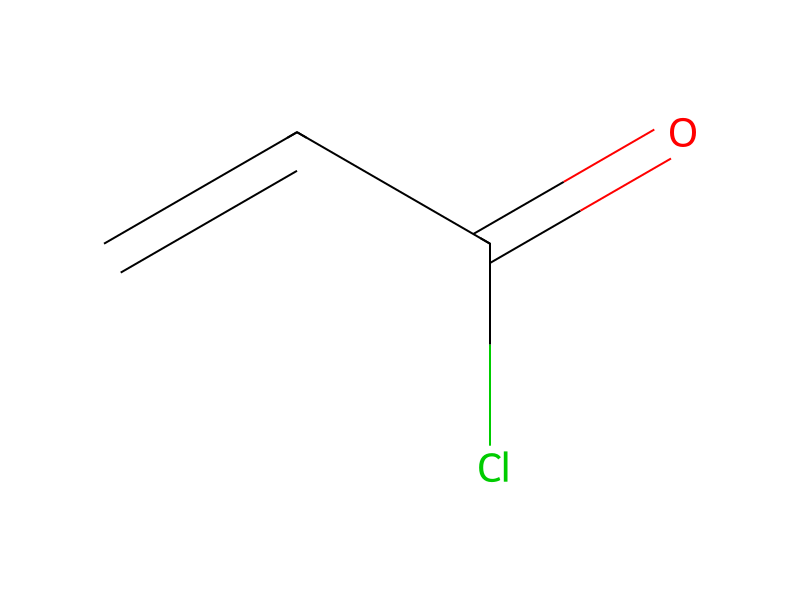
Acryloyl chloride → HCID 67195292, compound
Reaction equation

C(N(C(C)C)CC)(C)C.[C:10]([O:14][C:15]([N:17]1[CH2:22][CH2:21][CH:20]([S:23]([C:26]2[CH:31]=[CH:30][C:29]([NH2:32])=[CH:28][CH:27]=2)(=[O:25])=[O:24])[CH2:19][CH2:18]1)=[O:16])([CH3:13])([CH3:12])[CH3:11].[C:33](Cl)(=[O:36])[CH:34]=[CH2:35]>C1COCC1>[C:10]([O:14][C:15]([N:17]1[CH2:22][CH2:21][CH:20]([S:23]([C:26]2[CH:31]=[CH:30][C:29]([NH:32][C:33](=[O:36])[CH:34]=[CH2:35])=[CH:28][CH:27]=2)(=[O:25])=[O:24])[CH2:19][CH2:18]1)=[O:16])([CH3:13])([CH3:11])[CH3:12]Participants
5
Reactant 3


Product 1

Reagents, catalysts & solvents 1

Procedure
Diisopropylethylamine (0.09 ml, 0.5 mmol) was added in one portion to a stirred solution of 4-(4-Amino-benzenesulfonyl)-piperidine-1-carboxylic acid tert-butyl ester (0.11 g, 0.33 mmol) in THF (3 ml) at room temperature. To this mixture was added acryloyl chloride (0.03 ml, 0.5 mmol) in one portion and the mixture was stirred at room temperature under a nitrogen atmosphere for 1 hour. After this time, the mixture was concentrated under vacuum and the resulting residue was purified by column chromatography (elution: 40% heptane, 60% ethyl acetate) to give the title compound (0.02 g, 17% yield) as a white solid.
Workup
- concentrationAfter this time, the mixture was concentrated under vacuum
- customthe resulting residue was purified by column chromatography (elution: 40% heptane, 60% ethyl acetate)
Sources & evidence
- ORD record
- ord-5378c85dd9fb480e9700e26eb6d8011a
- Source dataset
- uspto-grants-2015_02
- Patent number
- US08946197B2
Reaction notes
Loading…