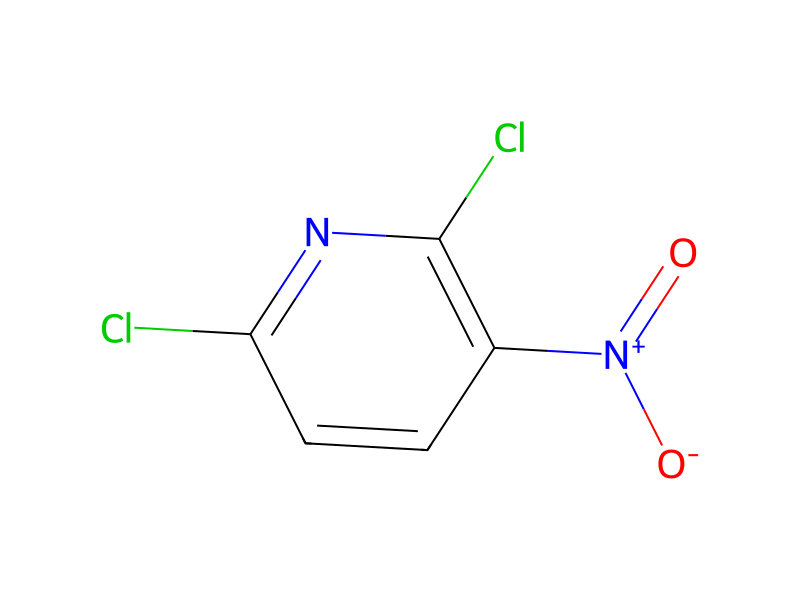
2,6-Dichloro-3-nitropyridine → HCID 43610512, compound
Reaction equation

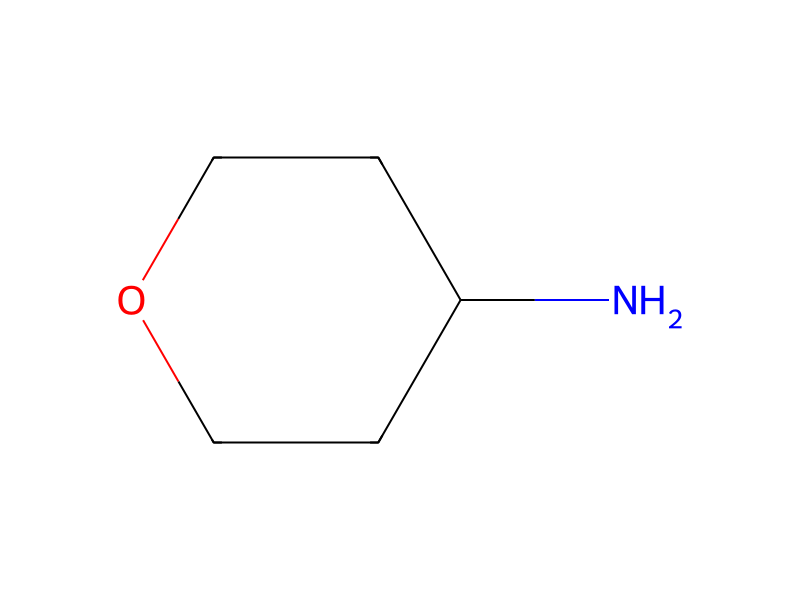
Cl[C:2]1[C:7]([N+:8]([O-:10])=[O:9])=[CH:6][CH:5]=[C:4]([Cl:11])[N:3]=1.[O:12]1[CH2:17][CH2:16][CH:15]([NH2:18])[CH2:14][CH2:13]1>>[Cl:11][C:4]1[N:3]=[C:2]([NH:18][CH:15]2[CH2:16][CH2:17][O:12][CH2:13][CH2:14]2)[C:7]([N+:8]([O-:10])=[O:9])=[CH:6][CH:5]=1Participants
3

Conditions
- Temperature
- 0 °C
Procedure
To a suspension of 2,6-dichloro-3-nitropyridine (6 g, 31.1 mmol) in AcN (200 mL) at 0° C., TEA (9 mL, 62.2 mmol) and tetrahydro-2H-pyran-4-amine (3.15 g. 31.1 mmol) were added. The reaction mixture was stirred at 0° C. for 1.5 h. The reaction crude was tempered and stirred at room temperature for 18 h. The reaction mixture was evaporated under reduced pressure, dissolved in EtOAc, and washed thrice with saturated NaHCO3 aqueous solution. The combined organic phases were dried over MgSO4 and concentrated to dryness. The crude residue was cromategraphed on a silica gel flash system (ISCO Combiflash) using hexanes/TBME mixtures of increasing polarity as eluent to afford 5.23 g of the desired product (65% yield).
Workup
- customThe reaction crude
- stirringstirred at room temperature for 18 h
- customThe reaction mixture was evaporated under reduced pressure
- dissolutiondissolved in EtOAc
- washwashed thrice with saturated NaHCO3 aqueous solution
- dry with materialThe combined organic phases were dried over MgSO4
- concentrationconcentrated to dryness
- temperatureof increasing polarity as eluent
Sources & evidence
- ORD record
- ord-259466ec94a641bbae5097560b3f5209
- Source dataset
- uspto-grants-2015_02
- Patent number
- US08946257B2
Reaction notes
Loading…