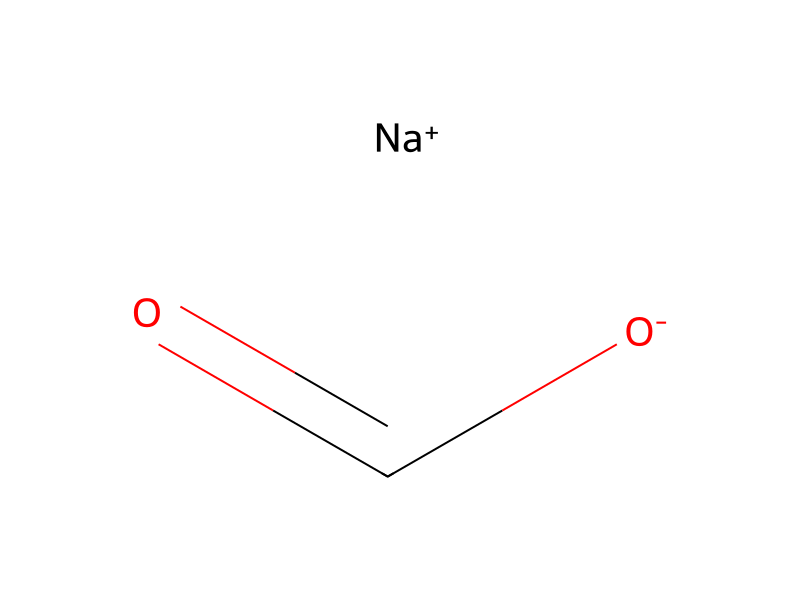
Sodium Formate → HCID 86611467, compound
Reaction equation

Br[C:2]1[CH:17]=[CH:16][C:5]([C:6]([NH:8][CH2:9][C:10]2[CH:15]=[CH:14][CH:13]=[CH:12][N:11]=2)=[O:7])=[C:4]([CH3:18])[CH:3]=1.[CH:19]([O-])=[O:20].[Na+].[C]=O>CN(C)C=O.O>[CH:19]([C:2]1[CH:17]=[CH:16][C:5]([C:6]([NH:8][CH2:9][C:10]2[CH:15]=[CH:14][CH:13]=[CH:12][N:11]=2)=[O:7])=[C:4]([CH3:18])[CH:3]=1)=[O:20]Participants
Reactant 3

Product 1

Reagents, catalysts & solvents 2


Procedure
In a solution of 2.0 g of 4-bromo-2-methyl-N-(2-pyridylmethyl) benzoic acid amide in 20 ml of N,N-dimethylformamide in an autoclave, 0.67 g of sodium formate and 0.10 g of dichlorobis(triphenylphosphine) palladium (II) were added, and stirred under 1.05 MPa carbon monoxide atmosphere at 110° C. for 3 hours. After the completion of the reaction, the reaction mixture was left and cooled to room temperature, and poured in 100 ml of water, and extracted with ethyl acetate (50 ml×2). The organic phases together were dehydrated with saturated sodium chloride aqueous solution and dried over anhydrous magnesium sulfate, and then the solvent was distilled off under reduced pressure. The residue was purified with silica gel column chromatography that was eluated with ethyl acetate-hexane (9:1), and 0.50 g of the aimed product was obtained as pale yellow crystal.
Workup
- customAfter the completion of the reaction
- waitthe reaction mixture was left
- extractionextracted with ethyl acetate (50 ml×2)
- dry with materialdried over anhydrous magnesium sulfate
- distillationthe solvent was distilled off under reduced pressure
- customThe residue was purified with silica gel column chromatography that
Sources & evidence
- ORD record
- ord-05df5ee8b6f3451e84edc659427c8610
- Source dataset
- uspto-grants-2015_02
- Patent number
- US08946492B2
Reaction notes
Loading…