Guanidine Hydrochloride → 4-(1,1-Dimethoxyethyl)pyrimidin-2-amine
Reaction equation

CN(C)[CH:3]=[CH:4][C:5](=O)[C:6]([O:10][CH3:11])([O:8][CH3:9])[CH3:7].C(=O)([O-])[O-].[K+].[K+].Cl.[NH2:21][C:22]([NH2:24])=[NH:23]>C(O)C>[CH3:9][O:8][C:6]([C:5]1[CH:4]=[CH:3][N:21]=[C:22]([NH2:24])[N:23]=1)([O:10][CH3:11])[CH3:7]Participants
5




Procedure
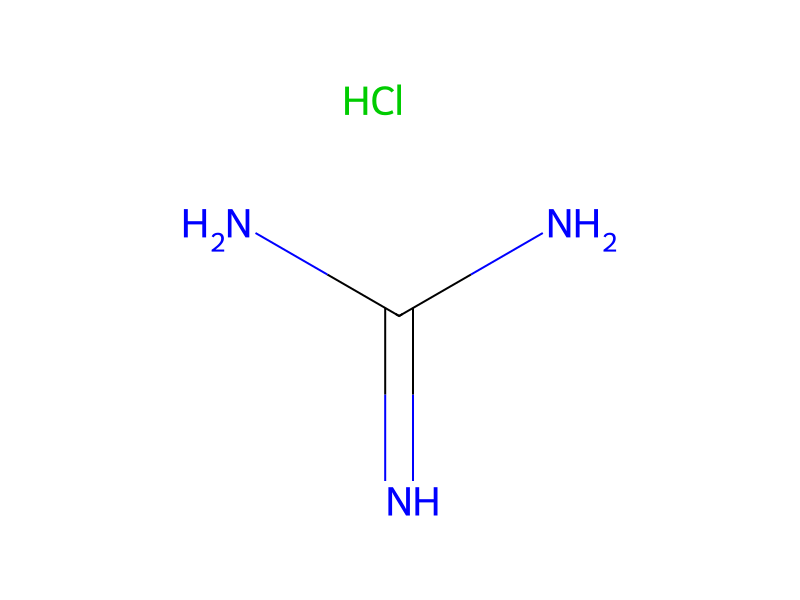
1-(dimethylamino)-4,4-dimethoxypent-1-en-3-one (1a) (34.29 g) was dissolved in ethanol (750 mL). Potassium carbonate (65.3 g) and guanidine hydrochloride (20.77 g) were added and the resulting suspension heated to reflux overnight. The reaction mixture was concentrated in vacuo, the residue was stirred with water overnight, filtered and dried in a vacuum oven at 40° C. overnight to afford the title compound (21.01 g) as a white solid. The filtrate was extracted with dichloromethane (3×700 mL) and the combined organic layers were dried over sodium sulfate and concentrated in vacuo to afford a further crop (10.6 g) of the title compound.
Workup
- temperaturethe resulting suspension heated
- temperatureto reflux overnight
- concentrationThe reaction mixture was concentrated in vacuo
- filtrationfiltered
- customdried in a vacuum oven at 40° C. overnight
Sources & evidence
- ORD record
- ord-f41f0e4475744640919d6cedb81c4085
- Source dataset
- uspto-grants-2015_02
- Patent number
- US08952001B2
Reaction notes
Loading…