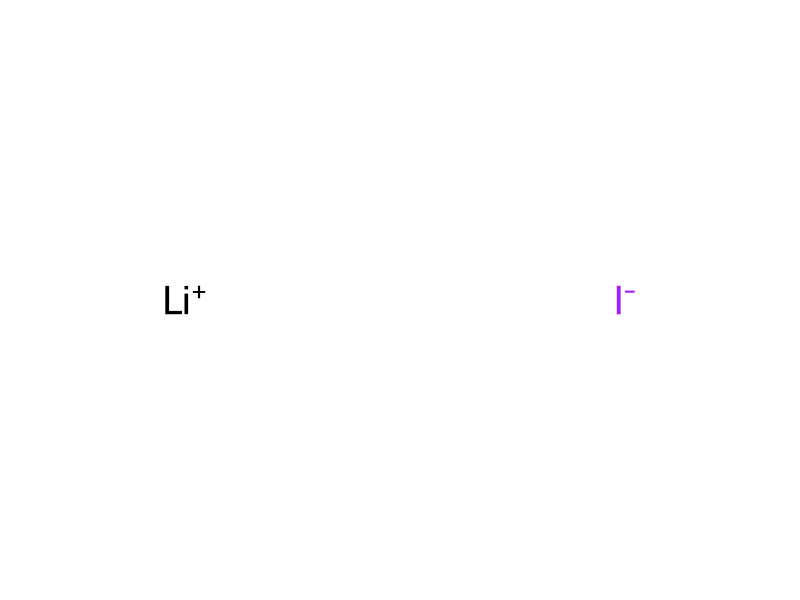
Lithium iodide → HCID 67954869, compound
Reaction equation

[CH:1]1([N:7]2[C:12](=[O:13])[C:11]([C:14]([O:16]CC)=[O:15])=[CH:10][N:9]=[C:8]2[C:19]2[CH:24]=[CH:23][CH:22]=[CH:21][CH:20]=2)[CH2:6][CH2:5][CH2:4][CH2:3][CH2:2]1.[I-].[Li+]>C(OCC)(=O)C>[CH:1]1([N:7]2[C:12](=[O:13])[C:11]([C:14]([OH:16])=[O:15])=[CH:10][N:9]=[C:8]2[C:19]2[CH:20]=[CH:21][CH:22]=[CH:23][CH:24]=2)[CH2:6][CH2:5][CH2:4][CH2:3][CH2:2]1Participants
4
Reactant 2

Product 1

Reagents, catalysts & solvents 1

Procedure
Ethyl 1-cyclohexyl-1,6-dihydro-6-oxo-2-phenyl-5-pyrimidinecarboxylate (1.41 g, 4.32 mmol) (i.e. the product from Example 11, Step A) was dissolved in ethyl acetate and treated with lithium iodide (powder, 1.72 g, 12.8 mmol) and heated to reflux for 16 h. The crude reaction mixture was concentrated under reduced pressure and then aqueous sodium bicarbonate was added and the resulting solution was extracted with ethyl acetate which was then discarded. The aqueous layer was made acidic with hydrochloric acid (1 N) and then extracted with dichloromethane (2×40 mL). The combined organic extracts were dried over MgSO4 and concentrated under reduced pressure resulting in 0.58 g of the title product as a solid.
Workup
- temperatureheated
- temperatureto reflux for 16 h
- customThe crude reaction mixture
- concentrationwas concentrated under reduced pressure
- additionaqueous sodium bicarbonate was added
- extractionthe resulting solution was extracted with ethyl acetate which
- extractionextracted with dichloromethane (2×40 mL)
- dry with materialThe combined organic extracts were dried over MgSO4
- concentrationconcentrated under reduced pressure
Sources & evidence
- ORD record
- ord-f5a05af909014f26b05acaac2ba3d023
- Source dataset
- uspto-grants-2015_02
- Patent number
- US08952024B2
Reaction notes
Loading…