Diisopropylethylamine → HCID 43215774, compound
Reaction equation

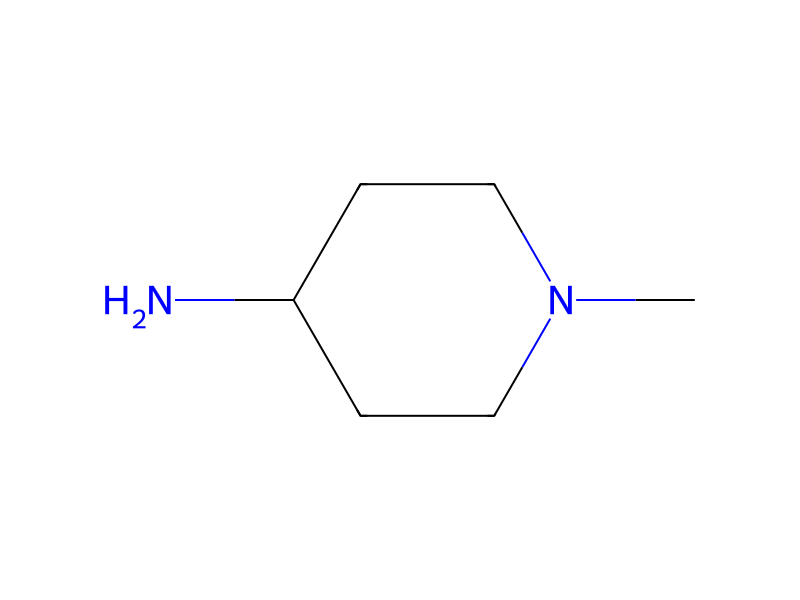
F[C:2]1[CH:12]=[CH:11][C:5]([C:6]([O:8]CC)=[O:7])=[CH:4][C:3]=1[N+:13]([O-:15])=[O:14].[CH3:16][N:17]1[CH2:22][CH2:21][CH:20]([NH2:23])[CH2:19][CH2:18]1.C(N(CC)C(C)C)(C)C>O1CCCC1>[CH3:16][N:17]1[CH2:22][CH2:21][CH:20]([NH:23][C:2]2[CH:12]=[CH:11][C:5]([C:6]([OH:8])=[O:7])=[CH:4][C:3]=2[N+:13]([O-:15])=[O:14])[CH2:19][CH2:18]1Participants
5
Reactant 3


Product 1

Reagents, catalysts & solvents 1

Procedure
To a solution of ethyl 4-fluoro-3-nitrobenzoate (2.13 g) and 1-methylpiperidin-4-amine (1.14 g) in tetrahydrofuran (40 mL) was added N,N-diisopropylethylamine (5 mL). The mixture was then stirred at reflux overnight. The solvent was evaporated and the residue was dissolved in ethyl acetate (300 mL) and washed with aqueous NaHCO3, water and brine. After evaporation of the solvent, the residue was dissolved in tetrahydrofuran (20 mL), methanol (10 mL) and water (10 mL). Then, LiOH H2O (2 g) was added. The mixture was stirred at room temperature overnight. The mixture was then concentrated and the residue was neutralized with 5% aqueous HCl. The precipitate was filtered, washed with brine, and dried under vacuum to give the product.
Workup
- temperatureat reflux overnight
- customThe solvent was evaporated
- dissolutionthe residue was dissolved in ethyl acetate (300 mL)
- washwashed with aqueous NaHCO3, water and brine
- customAfter evaporation of the solvent
- dissolutionthe residue was dissolved in tetrahydrofuran (20 mL)
- additionThen, LiOH H2O (2 g) was added
- stirringThe mixture was stirred at room temperature overnight
- concentrationThe mixture was then concentrated
- filtrationThe precipitate was filtered
- washwashed with brine
- customdried under vacuum
- customto give the product
Sources & evidence
- ORD record
- ord-b3bb510a32034c7588618b13ffac8b17
- Source dataset
- uspto-grants-2015_02
- Patent number
- US08952157B2
Reaction notes
Loading…