Carbazole → 3-Carbazolylbromobenzene
Reaction equation

[CH:1]1[C:13]2[NH:12][C:11]3[C:6](=[CH:7][CH:8]=[CH:9][CH:10]=3)[C:5]=2[CH:4]=[CH:3][CH:2]=1.[Br:14][C:15]1[CH:16]=[C:17](I)[CH:18]=[CH:19][CH:20]=1.[Na]>C1(C)C(C)=CC=CC=1.C1C=CC(/C=C/C(/C=C/C2C=CC=CC=2)=O)=CC=1.C1C=CC(/C=C/C(/C=C/C2C=CC=CC=2)=O)=CC=1.C1C=CC(/C=C/C(/C=C/C2C=CC=CC=2)=O)=CC=1.[Pd].[Pd].C1(P(C2C=CC=CC=2)[C-]2C=CC=C2)C=CC=CC=1.[C-]1(P(C2C=CC=CC=2)C2C=CC=CC=2)C=CC=C1.[Fe+2]>[Br:14][C:15]1[CH:20]=[C:19]([C:10]2[C:11]3[NH:12][C:13]4[C:5](=[CH:4][CH:3]=[CH:2][CH:1]=4)[C:6]=3[CH:7]=[CH:8][CH:9]=2)[CH:18]=[CH:17][CH:16]=1Participants
7
Reactant 3

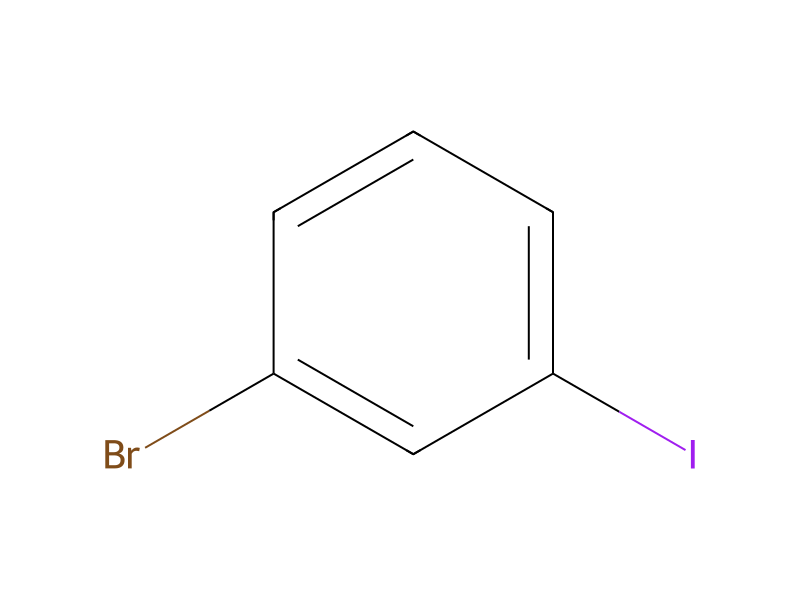

Product 1

Reagents, catalysts & solvents 3



Procedure
Carbazole (7.3 g, 43.7 mmol), 3-bromoiodobenzene (25 g, 87.3 mmol) and sodium t-buthoxide (8.4 g, 87.3 mmol) is suspended in 150 mL of dry xylene under nitrogen atmosphere. Tris(dibenzylideneacetone)dipalladium (200 mg) and 1,1′-bis(diphenylphosphino)ferrocene (400 mg) are added as one portion and the reaction is heated to reflux and stirred under nitrogen atmosphere for 24 h. After cooling the xylene is evaporated and the residue is subjected to column chromatography on silica gel, providing 3-bromophenyl carbazole (9.5 g, yellow solidified oil).
Workup
- temperaturethe reaction is heated
- temperatureto reflux
- customis evaporated
Sources & evidence
- ORD record
- ord-8ebd2e3c9bf84de9b743eb5b7661c0be
- Source dataset
- uspto-grants-2015_02
- Patent number
- US08952363B2
Reaction notes
Loading…