Phenol → 4-(1,1-diphenylethyl)phenol
Reaction equation

[C:1]1([C:7]([C:9]2[CH:14]=[CH:13][CH:12]=[CH:11][CH:10]=2)=[CH2:8])[CH:6]=[CH:5][CH:4]=[CH:3][CH:2]=1.[C:15]1([OH:21])[CH:20]=[CH:19][CH:18]=[CH:17][CH:16]=1.C1(C)C=CC(S(O)(=O)=O)=CC=1.C(=O)([O-])O.[Na+]>>[C:1]1([C:7]([C:18]2[CH:19]=[CH:20][C:15]([OH:21])=[CH:16][CH:17]=2)([C:9]2[CH:10]=[CH:11][CH:12]=[CH:13][CH:14]=2)[CH3:8])[CH:6]=[CH:5][CH:4]=[CH:3][CH:2]=1Participants
5


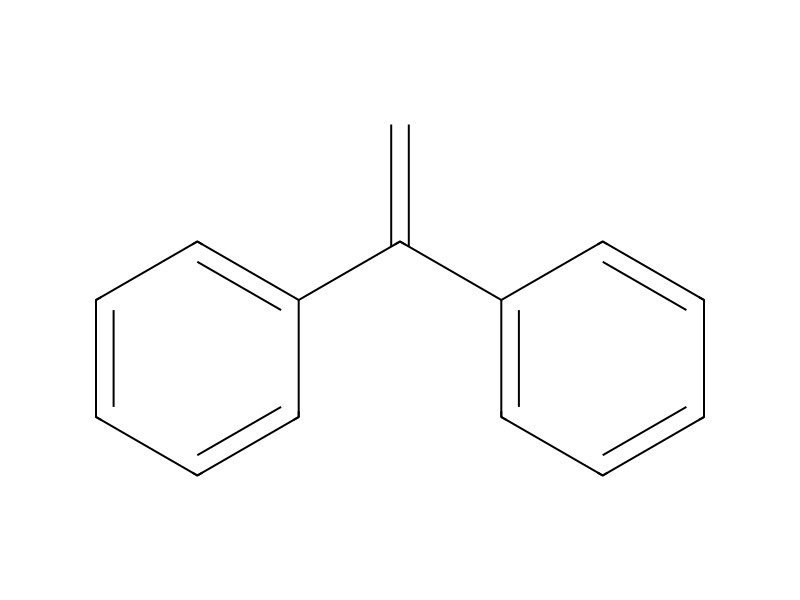


Procedure
1,1-Diphenylethylene and phenol in an excess amount were heated in an oil bath at 140° to 150° C. for 1 hour in the presence of p-toluenesulfonic acid. After being allowed to cool, p-toluenesulfonic acid was neutralized using sodium hydrogencarbonate and the excess phenol was then removed by steam distillation to obtain p-(1,1-diphenylethyl)phenol. The resulting phenol was then subjected to carboxylation by the Kolbe reaction according to the process described in Synthesis Example 1 to obtain Compound (4) which was then converted into the zinc salt by the same process as that described in Synthesis Example 2.
Workup
- temperatureto cool
- customthe excess phenol was then removed by steam distillation
Sources & evidence
- ORD record
- ord-9a33e9db65c041ca84efa519609bf79b
- Source dataset
- uspto-grants-1980_08
- Patent number
- US04219219
Reaction notes
Loading…