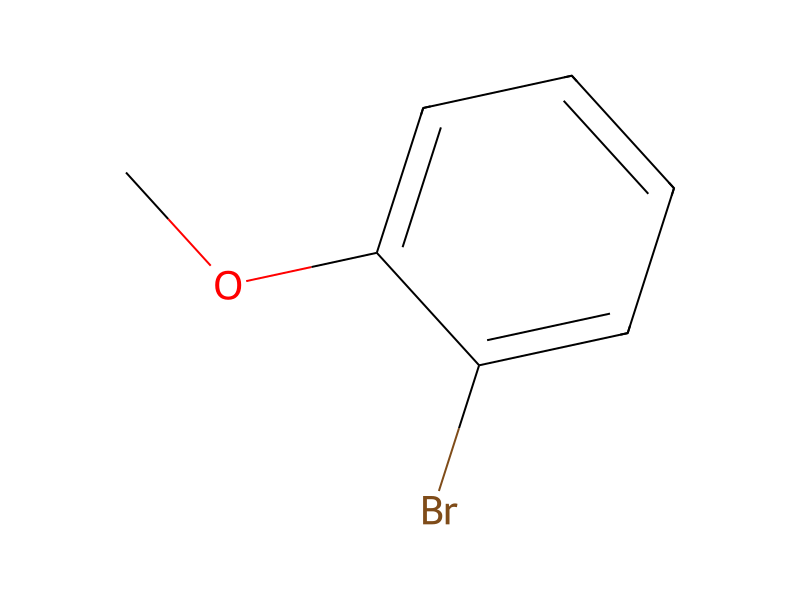
2-Bromoanisole → 2,6-Di(t-butyl)-4-hydroxy-4-(2'-methoxyphenyl)-2,5-cyclohexadienone
Reaction equation

Br[C:2]1[CH:7]=[CH:6][CH:5]=[CH:4][C:3]=1[O:8][CH3:9].[C:10]([C:14]1[CH:20]=[C:19]([OH:21])[CH:18]=[C:17]([C:22]([CH3:25])([CH3:24])[CH3:23])[C:15]=1[OH:16])([CH3:13])([CH3:12])[CH3:11]>>[C:10]([C:14]1[C:15](=[O:16])[C:17]([C:22]([CH3:25])([CH3:24])[CH3:23])=[CH:18][C:19]([OH:21])([C:2]2[CH:7]=[CH:6][CH:5]=[CH:4][C:3]=2[O:8][CH3:9])[CH:20]=1)([CH3:13])([CH3:12])[CH3:11]Participants
3


Procedure
Using the method described in Example 1, 2-bromo-methoxybenzene is reacted with 2,6-di(t-butyl)hydroquinone to provide 2,6-di(t-butyl)-4-hydroxy-4-(2'-methoxyphenyl)-2,5-cyclohexadienone. This product is dissolved in ethanol and reduced with hydrogen gas on a Parr apparatus using palladium on charcoal as the catalyst. The white solid product is recrystallized from benzene to provide 2,6-di(t-butyl)-4-(2'-methoxyphenyl)phenol, m.p. 98.5°-100° C.
Sources & evidence
- ORD record
- ord-f23307a0c0414bf38d622987484511e8
- Source dataset
- uspto-grants-1980_08
- Patent number
- US04219501
Reaction notes
Loading…