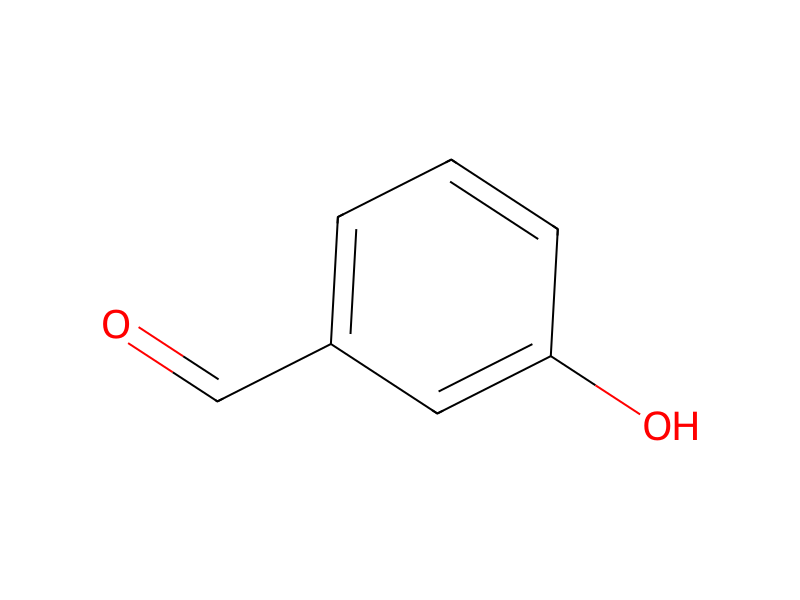
3-Hydroxybenzaldehyde → 3(2H)-Benzofuranone, 6-hydroxy-2-[(3-hydroxyphenyl)methylene]-
Reaction equation

[OH:1][C:2]1[CH:11]=[CH:10][C:5]2[C:6](=[O:9])[CH2:7][O:8][C:4]=2[CH:3]=1.[OH:12][C:13]1[CH:14]=[C:15]([CH:18]=[CH:19][CH:20]=1)[CH:16]=O.Cl.O>CO>[OH:12][C:13]1[CH:14]=[C:15]([CH:16]=[C:7]2[C:6](=[O:9])[C:5]3[CH:10]=[CH:11][C:2]([OH:1])=[CH:3][C:4]=3[O:8]2)[CH:18]=[CH:19][CH:20]=1Participants
6





Procedure
After 6-hydroxy-2H-benzofuran-3-one 1 g and 3-hydroxybenzaldehyde 0.813 g were dissolved in methanol 75 ml, concentrated hydrochloric acid 50 ml was added, and the mixture was refluxed for two hours. The solution was cooled to room temperature, water 400 ml was added and allowed to stand for one hour. Precipitated crystals were filtered. The crystals were dried over phosphorous pentoxide at a temperature of 60° C. for five hours under reduced pressure to obtain the desired compound 1.20 g.
Workup
- temperaturethe mixture was refluxed for two hours
- customPrecipitated crystals
- filtrationwere filtered
- dry with materialThe crystals were dried over phosphorous pentoxide at a temperature of 60° C. for five hours under reduced pressure
Sources & evidence
- ORD record
- ord-1fd35ca8fae141c3a5cac3f5fd0cbf6d
- Source dataset
- uspto-grants-2000_11
- Patent number
- US06143779
Reaction notes
Loading…