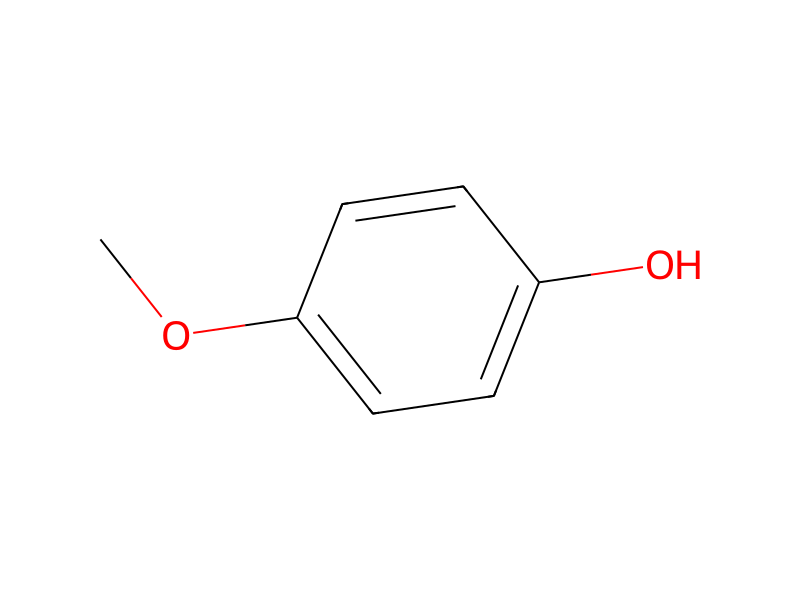
4-Methoxyphenol → HCID 22132780, compound
Reaction equation

Cl[C:2]1[C:11]2[C:6](=[CH:7][C:8]([O:14][CH3:15])=[C:9]([O:12][CH3:13])[CH:10]=2)[N:5]=[CH:4][CH:3]=1.[CH3:16][O:17][C:18]1[CH:23]=[CH:22][C:21]([OH:24])=[CH:20][CH:19]=1.C(=O)([O-])O.[Na+]>C(Cl)(Cl)Cl.C(OCC)(=O)C>[CH3:13][O:12][C:9]1[CH:10]=[C:11]2[C:6](=[CH:7][C:8]=1[O:14][CH3:15])[N:5]=[CH:4][CH:3]=[C:2]2[O:24][C:21]1[CH:22]=[CH:23][C:18]([O:17][CH3:16])=[CH:19][CH:20]=1Participants
5
Reactant 3


Product 1

Reagents, catalysts & solvents 1

Conditions
- Temperature
- 150 °C
Procedure
4-Chloro-6,7-dimethoxyquinoline (103 mg) and commercially available 4-methoxyphenol (286 mg) were mixed and stirred at 150° C. for 6 hours. The reaction mixture was neutralized with saturated aqueous sodium hydrogen carbonate and then partitioned between water and ethyl acetate, and the ethyl acetate layer was washed with brine and dried with anhydrous sodium sulfate. After removing the solvent by reduced-pressure distillation, the resulting residue was purified by column chromatography on silica gel eluting first with hexane/ethyl acetate and then with chloroform/ethyl acetate to obtain 2.21 g of the title compound (yield: 88%).
Workup
- custompartitioned between water and ethyl acetate
- washthe ethyl acetate layer was washed with brine
- dry with materialdried with anhydrous sodium sulfate
- customAfter removing the solvent
- distillationby reduced-pressure distillation
- customthe resulting residue was purified by column chromatography on silica gel eluting first with hexane/ethyl acetate
Sources & evidence
- ORD record
- ord-d20ab702e75d43feb19d7e21baf4616f
- Source dataset
- uspto-grants-2000_11
- Patent number
- US06143764
Reaction notes
Loading…