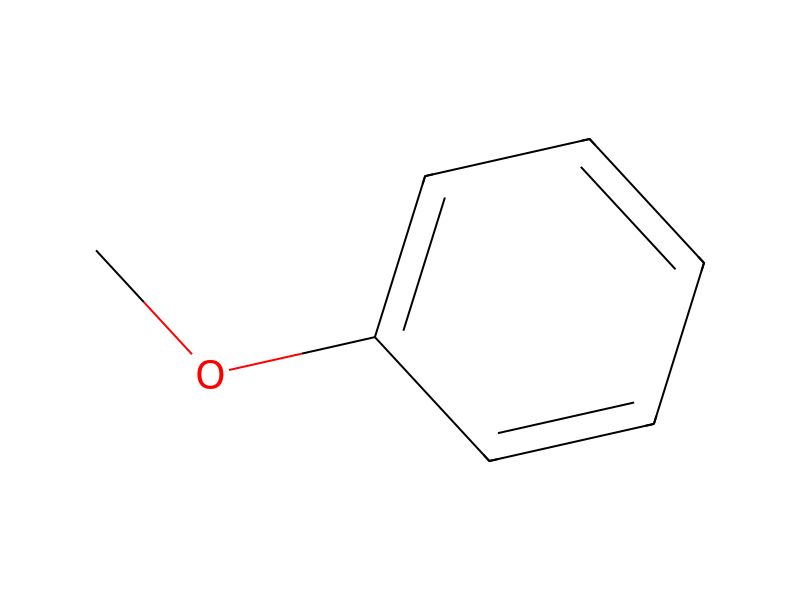
Anisole → 4-Bromo-4'-methoxybenzophenone
Reaction equation

[C:1]1([O:7][CH3:8])[CH:6]=[CH:5][CH:4]=[CH:3][CH:2]=1.[Br:9][C:10]1[CH:18]=[CH:17][C:13]([C:14](Cl)=[O:15])=[CH:12][CH:11]=1.FC(F)(F)S([O-])(=O)=O.[Yb+3].FC(F)(F)S([O-])(=O)=O.FC(F)(F)S([O-])(=O)=O>[N+](C)([O-])=O>[Br:9][C:10]1[CH:18]=[CH:17][C:13]([C:14]([C:4]2[CH:5]=[CH:6][C:1]([O:7][CH3:8])=[CH:2][CH:3]=2)=[O:15])=[CH:12][CH:11]=1Participants
5
Reactant 3


Product 1

Reagents, catalysts & solvents 1

Conditions
- Temperature
- 60 °C
Procedure
To commercially available nitromethane (10 ml) were added commercially available anisole (1.08 g), commercially available 4-bromobenzoyl chloride (2.20 g) and commercially available ytterbium(III) trifluoromethanesulfonate (620 mg), and the admixture was stirred at 60° C. overnight. The reaction mixture was partitioned between water and chloroform, and the chloroform layer was then dried with anhydrous magnesium sulfate. After removing the solvent by reduced-pressure distillation, the resulting residue was purified by column chromatography on silica gel eluting with hexane/ethyl acetate to obtain 1.65 g of the title compound (yield: 57%).
Workup
- customThe reaction mixture was partitioned between water and chloroform
- dry with materialthe chloroform layer was then dried with anhydrous magnesium sulfate
- customAfter removing the solvent
- distillationby reduced-pressure distillation
- customthe resulting residue was purified by column chromatography on silica gel eluting with hexane/ethyl acetate
Sources & evidence
- ORD record
- ord-f8f4f87c65434f45b8bd6ac9b02b38f5
- Source dataset
- uspto-grants-2000_11
- Patent number
- US06143764
Reaction notes
Loading…