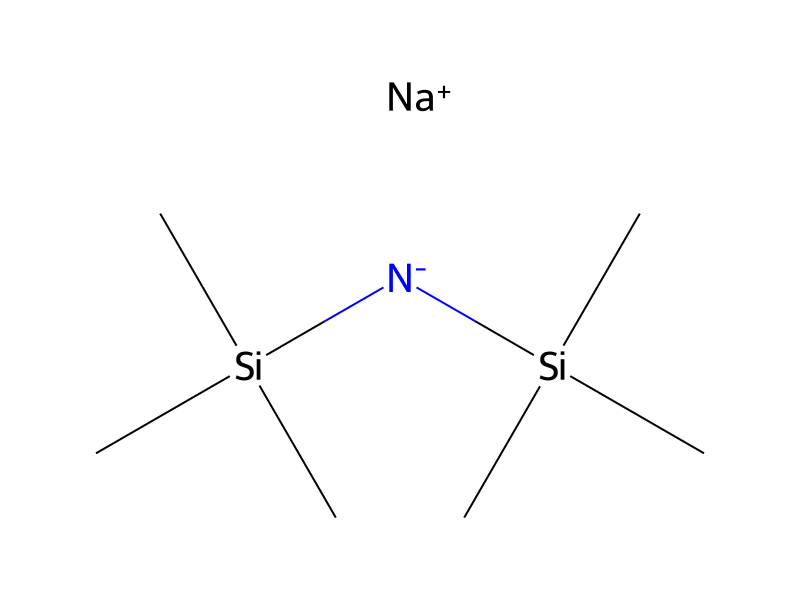
Sodium bis(trimethylsilyl)amide → 3-(3-bromophenyl)-7-chloro-4-hydroxy-6-nitro-1H-quinolin-2-one
Reaction equation

CO[C:3](=[O:25])[C:4]1[CH:9]=[C:8]([N+:10]([O-:12])=[O:11])[C:7]([Cl:13])=[CH:6][C:5]=1[NH:14][C:15](=[O:24])[CH2:16][C:17]1[CH:22]=[CH:21][CH:20]=[C:19]([Br:23])[CH:18]=1.C[Si]([N-][Si](C)(C)C)(C)C.[Na+]>O1CCCC1>[Br:23][C:19]1[CH:18]=[C:17]([C:16]2[C:15](=[O:24])[NH:14][C:5]3[C:4]([C:3]=2[OH:25])=[CH:9][C:8]([N+:10]([O-:12])=[O:11])=[C:7]([Cl:13])[CH:6]=3)[CH:22]=[CH:21][CH:20]=1Participants
4



Procedure
To a solution of 2-[2-(3-bromophenyl)-acetylamino]-4-chloro-5-nitro-benzoic acid methyl ester (1.18 g in 15 mL dry tetrahydrofuran) at 0° C. was added dropwise a solution of sodium bis(trimethylsilyl)amide (6.9 mL of a 1.0M solution in tetrahydrofuran) and the mixture warmed to room temperature. After 2 hours, the reaction was quenched by the addition of 200 mL iced 6N hydrochloric acid. The slurry was stirred for 10 minutes then filtered and washed (2×) with ice water and then cold acetonitrile. The residue was dried overnight at 45° C. to give the title compound (887 mg).
Workup
- customthe reaction was quenched by the addition of 200 mL iced 6N hydrochloric acid
- filtrationthen filtered
- washwashed (2×) with ice water
- customThe residue was dried overnight at 45° C.
Sources & evidence
- ORD record
- ord-1fba2759eeee4957afd4f1382d745087
- Source dataset
- uspto-grants-2000_11
- Patent number
- US06147088
Reaction notes
Loading…