Hydroxylamine → Benzoic Acid
Reaction equation

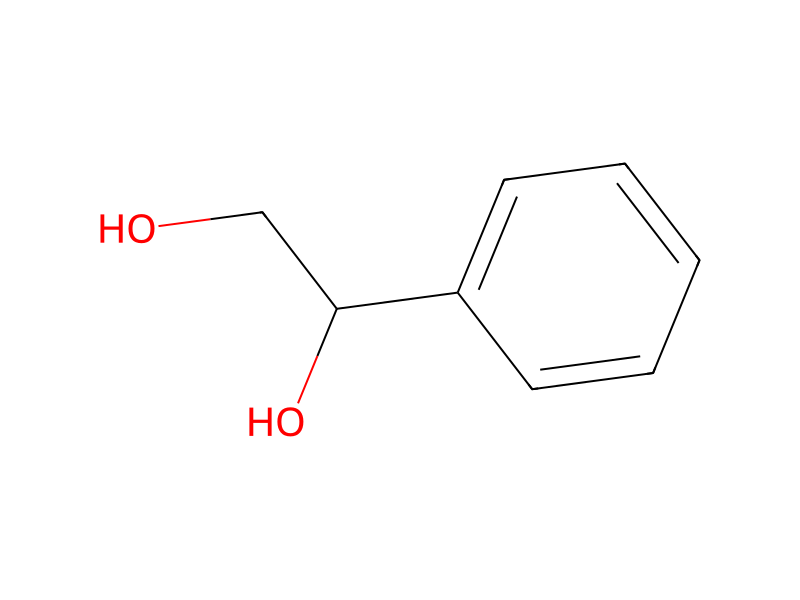
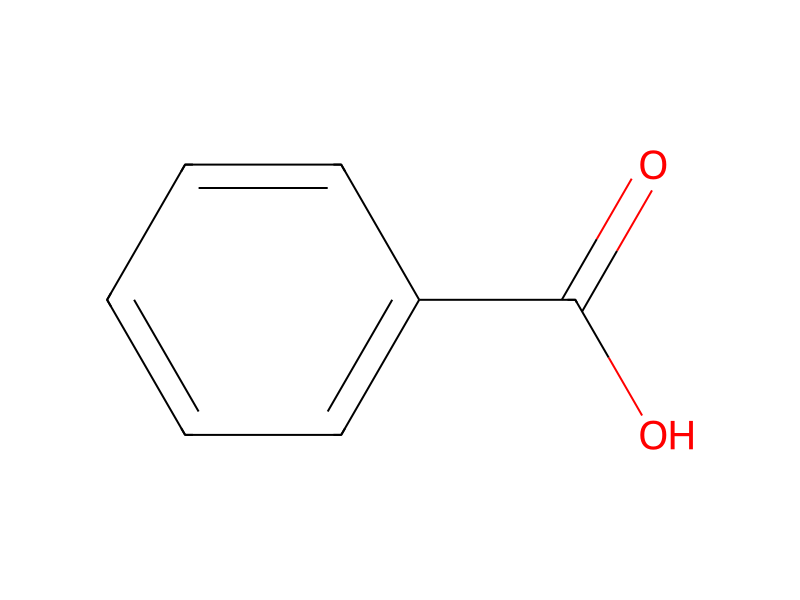
N[OH:2].[C:3]1([CH:9]([OH:12])CO)[CH:8]=[CH:7][CH:6]=[CH:5][CH:4]=1>>[C:9]([OH:12])(=[O:2])[C:3]1[CH:4]=[CH:5][CH:6]=[CH:7][CH:8]=1Participants

Procedure
Results for the oxidation of a variety of alcohols as represented in the reaction scheme are summarized in Table 1. ##STR10## Oxidation of phenethanol (1a) gave phenylacetic acid (2a) in 96% yield (entry 1). Similarly, substrates with electron rich aromatic rings, such as 1b and 1c, were converted into the carboxylic acids 2b and 2c in excellent yields (entry 2,3). Most notably, chiral alcohol id was cleanly oxidized to 2d (95%) without any evidence of racemization based on chiral HPLC assay (entry 4). This was perhaps attributed to the fact that the aldehyde intermediate was very short lived under the reaction conditions. In all cases examined, the aldehyde intermediates were not observed in more than 5% during the reactions (HPLC). The cyclopropyl group in alcohol 1e was intact under the reaction conditions to give 2e in 90% yield (entry 5). Amidoacetal in 1f also survived to give the desired product 2f in 73% yield (entry 6). Cbz-protected amino alcohol 1g was oxidized to the Cbz-protected amino acid 2g in good yield without racemization (83%, entry 7). In this case, the reaction was carried out at r.t. due to the low solubility of the substrate at 0° C. For the vicinal diol, 1-phenyl-1,2-ethanediol (1h), carbon-carbon bond cleavage occurred to give benzoic acid in 77% yield (entry 8). To our surprise, oxidation of benzylic alcohols such as benzyl alcohol, 4-methoxybenzyl alcohol and furfuryl alcohol gave unsatisfactory results. Interestingly, electron deficient 4-nitrobenzyl alcohol (1i) gave a quantitative yield of 4-nitrobenzoic acid (entry 9). Substrates with very electron rich aromatic groups, such as 2,4,6-trimethoxybenzyl alcohol and 2-(3',4'-dimethoxyphenyl) ethanol, gave complex reaction mixtures. No reaction was observed for cinnamyl alcohol and 3-phenyl-2-propyn-1-ol. As expected, secondary alcohols, sec-phenethanol (1j) and 1-phenyl-2-propanol (1k), were oxidized to acetophenone and phenylacetone respectively in quantitative yield (entry 10, 11). Only 1.25 equivalents of periodic acid and 0.6 mol % CrO3 were required in these cases.
Workup
- customin good yield without racemization (83%, entry 7)
- customwas carried out at r.t. due to the low solubility of the substrate at 0° C
Sources & evidence
- ORD record
- ord-800239ca08d24a52b85098d891250ae2
- Source dataset
- uspto-grants-2000_11
- Patent number
- US06150554
Reaction notes
Loading…