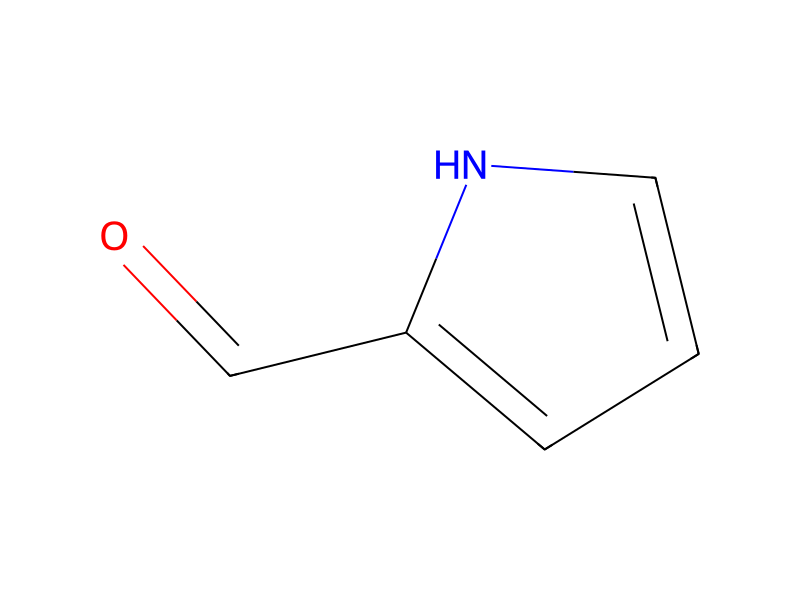
Pyrrole-2-carboxaldehyde → (Z)-1,3-Dihydro-4-fluoro-5-nitro-3-[(1H-pyrrol-2-yl)methylene]-2H-indol-2-one
Reaction equation

[F:1][C:2]1[C:10]([N+:11]([O-:13])=[O:12])=[CH:9][CH:8]=[C:7]2[C:3]=1[CH2:4][C:5](=[O:14])[NH:6]2.[NH:15]1[CH:19]=[CH:18][CH:17]=[C:16]1[CH:20]=O.[OH-].C([N+](CCCC)(CCCC)CCCC)CCC>CO>[F:1][C:2]1[C:10]([N+:11]([O-:13])=[O:12])=[CH:9][CH:8]=[C:7]2[C:3]=1/[C:4](=[CH:20]/[C:16]1[NH:15][CH:19]=[CH:18][CH:17]=1)/[C:5](=[O:14])[NH:6]2Participants
5



Procedure
To a solution of 1,3-dihydro-4-fluoro-5-nitro-2H-indol-2-one (400 mg, 2.04 mmol) (Starting Material 10) in MeOH (4 mL), was successively added at room temperature pyrrole-2-carboxaldehyde (220 mg, 2.25 mmol) (Aldrich) and tetrabutyl ammonium hydroxide (4.5 mL, 1.0 M solution in MeOH)(Aldrich). The mixture was stirred at r.t. for 12 h, then quenched with 1N HCl. The yellow precipitate was collected by suction filtration, washed with water and dried in a vacuum oven. (Yield 510 mg,92%).
Workup
- customquenched with 1N HCl
- filtrationThe yellow precipitate was collected by suction filtration
- washwashed with water
- customdried in a vacuum oven
Sources & evidence
- ORD record
- ord-3ff0a546d01c4f4d8abb9461ed49e5d5
- Source dataset
- uspto-grants-2000_11
- Patent number
- US06153634
Reaction notes
Loading…