Hydrochloric Acid → 4,4,4-Trifluoro-1-(1-cyclohexenyl)-1,3-butanedione
Reaction equation

[C:1]1([CH2:7][C:8](CC2CCCCC=2)=O)[CH2:6][CH2:5][CH2:4][CH2:3][CH:2]=1.[F:17][C:18]([F:25])([F:24])[C:19]([O:21]CC)=O.C[O-:27].[Na+].Cl>COCCOC.O.CCOC(C)=O>[F:25][C:18]([F:17])([F:24])[C:19](=[O:21])[CH2:8][C:7]([C:1]1[CH2:6][CH2:5][CH2:4][CH2:3][CH:2]=1)=[O:27]Participants
8
Reactant 4



Product 1

Reagents, catalysts & solvents 3



Procedure
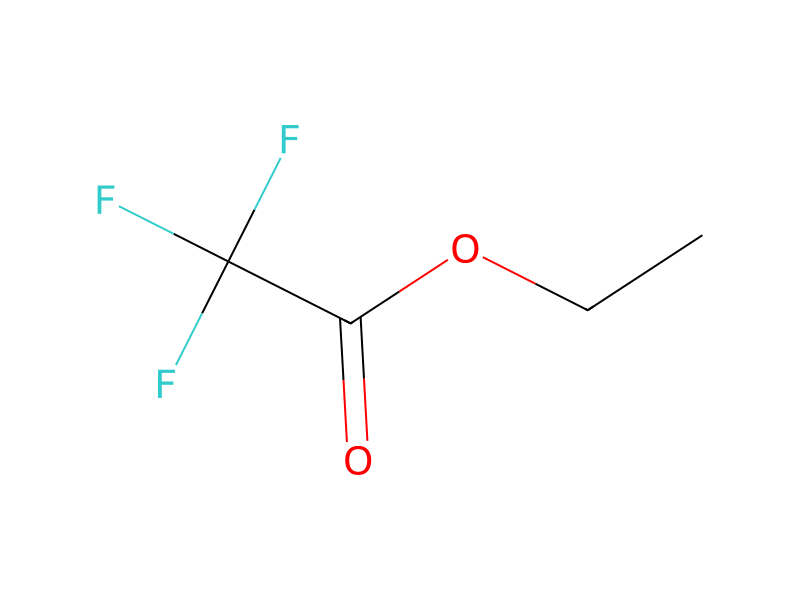
To a stirred solution of 1-cyclohexenylmethylketone (1 ml, 7.8 mmol) in DME (60 ml) was added ethyl trifluoroacetate (2.8 ml, 23.4 mmol) and sodium methoxide (2.2 g, 39 mmol), and the resulting reaction mixture was stirred at room temperature overnight. EtOAc (200 ml) and water (50 ml) were added, and the pH of the aqueous layer was adjusted to 6 by addition of 2 N HCl solution. The organic layer was washed with brine (50 ml), dried over MgSO4, and concentrated in vacuo to give the title compound in quantitative yield. This was used for the next coupling step without further purification.
Workup
- customthe resulting reaction mixture
- washThe organic layer was washed with brine (50 ml)
- dry with materialdried over MgSO4
- concentrationconcentrated in vacuo
Sources & evidence
- ORD record
- ord-d8fd76cb92cc47d38969a30e54f11137
- Source dataset
- uspto-grants-2003_03
- Patent number
- US06531492B1
Reaction notes
Loading…