Hydrochloric Acid → HCID 11298899, compound
Reaction equation

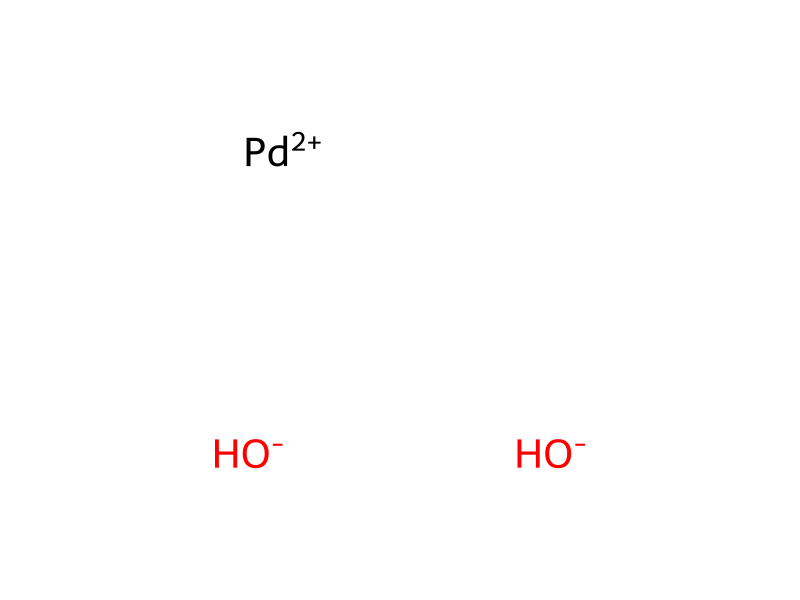
[C:1]([C:3]1[CH:12]=[CH:11][C:6]([C:7]([O:9][CH3:10])=[O:8])=[C:5]([N+:13]([O-])=O)[CH:4]=1)#[N:2].[H][H].[ClH:18]>O.[OH-].[Pd+2].[OH-]>[Cl-:18].[NH2:13][C:5]1[CH:4]=[C:3]([CH:12]=[CH:11][C:6]=1[C:7]([O:9][CH3:10])=[O:8])[CH2:1][NH3+:2]Participants
6
Reactant 3



Product 1

Reagents, catalysts & solvents 2

Procedure
18.5 g (0.09 mol) of methyl 4-cyano-2-nitrobenzoate and 0.93 g of palladium hydroxide (20% on charcoal) are suspended in a mixture of 8 ml of concentrated hydrochloric acid (30% strength) and 315 ml of water in a Hastelloy stirred autoclave. Then, the mixture is hydrogenated at a hydrogen pressure of 17 bar until the hydrogen uptake is complete. After the pressure in the autoclave has been released and the catalyst filtered off, the filtrate is evaporated completely. This gives 19.5 g (97% strength) of 3-amino-4-methoxycarbonylbenzylammonium chloride of melting point 200-205° C.
Workup
- filtrationthe catalyst filtered off
- customthe filtrate is evaporated completely
Sources & evidence
- ORD record
- ord-147b25a5288c402282bd0617fad95400
- Source dataset
- uspto-grants-2003_03
- Patent number
- US06538150B2
Reaction notes
Loading…