Hydrochloric Acid → 2-Chloro-4-fluorobenzeneboronic acid
Reaction equation

II.[Cl:3][C:4]1[CH:9]=[C:8]([F:10])[CH:7]=[CH:6][C:5]=1I.[B:12](OC)([O:15]C)[O:13]C.Cl>C1COCC1>[Cl:3][C:4]1[CH:9]=[C:8]([F:10])[CH:7]=[CH:6][C:5]=1[B:12]([OH:15])[OH:13]Participants
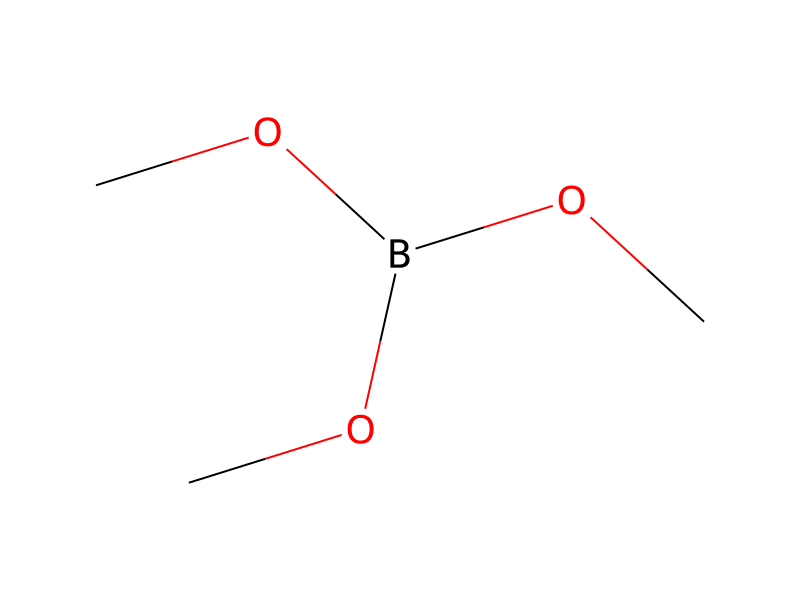
Reactant 4



Product 1

Reagents, catalysts & solvents 1

Procedure
To 1.05 g Mg in THF (20 mL) was added catalytic I2 and then a 1 mL portion of the 2-Chloro-4-fluoro-iodobenzene (10 g total, 39 mmol) was added. The mixture was stirred, slowly warmed, and an exothermic reaction began. The remainder of the 2-Chloro-4-fluoro-iodobenzene was added at a rate to maintain the exotherm and then the reaction was heated to THF reflux for 2.5 h, then cooled to 23°. The resulting mixture was added with rapid stirring to a −70° solution of trimethyl borate (4.53 mL, 40 mmol) in THF (40 mL). The reaction was stirred at <0° for 20 min and at 23° for 16 h, then poured into 2N HCl (150 mL), stirred 2 h, and the THF was removed under vacuum. The residual aqueous solution was extracted with Et2O (3×200 mL) and the combined extracts were dried (Na2SO4) and concentrated to afford a red solid. Trituration with hexane and drying afforded the title compound as a tan solid. (1.89 g, 28%). 1H-NMR CD3OD δ 7.09 (m, 1H), 7.21 (m, 1H), 7.38 (m, 1H).
Workup
- temperatureslowly warmed
- customan exothermic reaction
- temperatureto maintain the exotherm
- temperaturereflux for 2.5 h
- temperaturecooled to 23°
- additionThe resulting mixture was added
- stirringThe reaction was stirred at <0° for 20 min and at 23° for 16 h
- stirringstirred 2 h
- customthe THF was removed under vacuum
- extractionThe residual aqueous solution was extracted with Et2O (3×200 mL)
- dry with materialthe combined extracts were dried (Na2SO4)
- concentrationconcentrated
- customto afford a red solid
- dry with materialTrituration with hexane and drying
Sources & evidence
- ORD record
- ord-6940d7a340ad42f0b2008bb6a1793aca
- Source dataset
- uspto-grants-2009_12
- Patent number
- US07629350B2
Reaction notes
Loading…