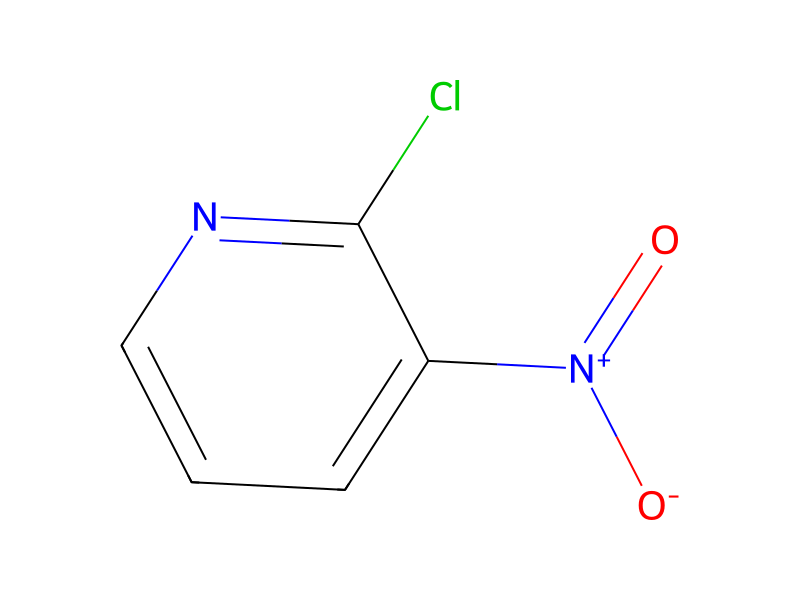
2-Chloro-3-nitropyridine → 2-{4-[(3-Chlorophenyl)sulfonyl]piperidin-1-yl}-3-nitropyridine
Reaction equation

[Cl:1][C:2]1[CH:3]=[C:4]([S:8]([CH:11]2[CH2:16][CH2:15][NH:14][CH2:13][CH2:12]2)(=[O:10])=[O:9])[CH:5]=[CH:6][CH:7]=1.Cl[C:18]1[C:23]([N+:24]([O-:26])=[O:25])=[CH:22][CH:21]=[CH:20][N:19]=1.CCN(C(C)C)C(C)C>O1CCOCC1>[Cl:1][C:2]1[CH:3]=[C:4]([S:8]([CH:11]2[CH2:16][CH2:15][N:14]([C:18]3[C:23]([N+:24]([O-:26])=[O:25])=[CH:22][CH:21]=[CH:20][N:19]=3)[CH2:13][CH2:12]2)(=[O:10])=[O:9])[CH:5]=[CH:6][CH:7]=1Participants
5




Procedure
Using the procedure from Example 7A, 4-[(3-chlorophenyl)sulfonyl]piperidine (100 mg, 0.38 mmol) was reacted with 2-chloro-3-nitropyridine (122 mg, 0.76 mmol), DIEA (0.2 ml, 1.14) and 1,4-dioxane (0.3 ml) to afford the title compound (118 mg), a yellow solid, in 81% yield.
Sources & evidence
- ORD record
- ord-31a7bdf152bf435f8e98832fcf22e98d
- Source dataset
- uspto-grants-2009_12
- Patent number
- US07632838B2
Reaction notes
Loading…