Diethylamine → 1-Nitro-3-[2-(trimethylsilyl)ethynyl]-benzene
Reaction equation

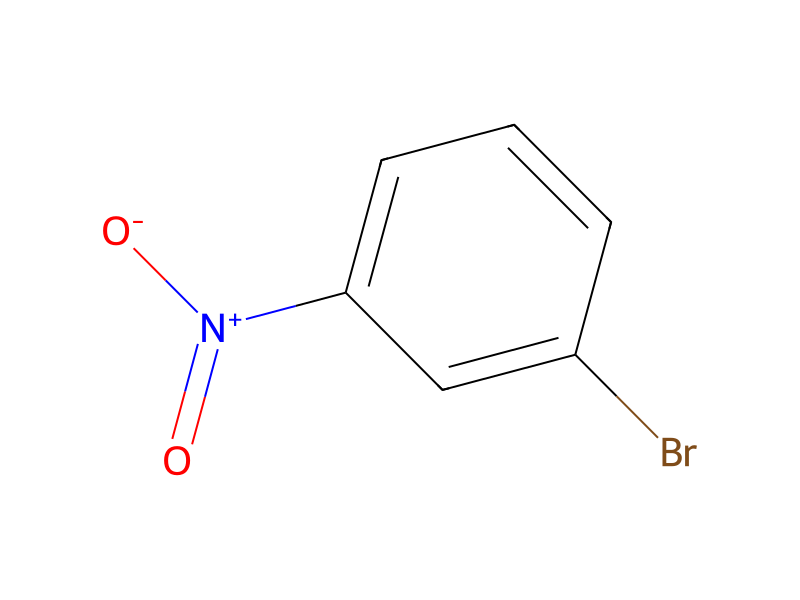
C(C1C=C(C=CC=1)N)#CC.Br[C:12]1[CH:13]=[C:14]([N+:18]([O-:20])=[O:19])[CH:15]=[CH:16][CH:17]=1.[CH3:21][Si:22]([C:25]#[CH:26])([CH3:24])[CH3:23].C(NCC)C>C1C=CC([P]([Pd]([P](C2C=CC=CC=2)(C2C=CC=CC=2)C2C=CC=CC=2)([P](C2C=CC=CC=2)(C2C=CC=CC=2)C2C=CC=CC=2)[P](C2C=CC=CC=2)(C2C=CC=CC=2)C2C=CC=CC=2)(C2C=CC=CC=2)C2C=CC=CC=2)=CC=1>[CH3:21][Si:22]([C:25]#[C:26][C:12]1[CH:13]=[C:14]([N+:18]([O-:20])=[O:19])[CH:15]=[CH:16][CH:17]=1)([CH3:24])[CH3:23]Participants





Procedure
3-(Propyn-1-yl)aniline, used above, was prepared from 3-bromo-nitrobenzene in four steps. 3-Bromo-nitrobenzene (5.0 gm, 24.7 mmol), tetrakis(triphenylphosphine)palladium (1.0 gm), trimethylsilyl-acetylene (3.6 gm, 37 mmol) and cuprous iodide (20 mg) in 20 mL of nitrogen purged, dry diethylamine at reflux for 16 hours. The cooled reaction mixture was vacuum evaporated, diluted with 50 mL of methylene chloride and 50 mL of 1N hydrochloric acid and filtered. The organic layer was collected and dried with magnesium sulfate filtered and vacuum evaporated to a residue. The 3-trimethylsilylethynylnitrobenzene was purified by flash chromatography on silica gel eluted with 2:1 hexanes:methylene chloride. Fractions containing the pure material were vacuum evaporated to afford pure 3-trimethylsilylethynyl nitrobenzene (4.6 gm). 4.0 gm of this were dissolved in 30 mL of methanol and 1 drop of water containing 1.16 gm of potassium carbonate. After one hour the mixture was vacuum evaporated and diluted with 100 mL of methylene chloride. The organic layer was washed with 100 mL of 1N hydrochloric acid, dried with magnesium sulfate, filtered and vacuum evaporated to a residue (2.96 gm). 790 mg of this was dissolved in 10 mL of benzene and treated with finely pulverized 87% potassium hydroxide (377 mg, 5.91 mmol), methyl iodide (2 mL) and 10 mg of 18-Crown-6 (Aldrich) at reflux for 16 hours. An additional 0.5 mL of methyl iodide were added and the reflux continued for an additional 2 hours. The cooled reaction mixture was vacuum evaporated to a residue which was diluted with 100 mL of methylene chloride and washed with 100 mL of 1N hydrochloric acid, dried with magnesium sulfate, filtered and vacuum evaporated to an oil. This was purified by flash chromatography on silica gel eluted with 1:1 hexanes:methylene chloride. Fractions containing pure 3-(propyn-1-yl)-nitrobenzene were vacuum evaporated to an oil which was used without further purification; 530 mg (61%). 3-(Propyn-1-yl)-nitrobenzene (530 mg, 3.3 mmol), iron powder (400 mg, 7.27 mmol), 3 mL of concentrated hydrochloric acid and 10 mL of methanol were refluxed for 1 hour. The reaction mixture was filtered and vacuum evaporated to a solid which was partitioned between 100 mL of methylene chloride and 100 mL of 1N sodium hydroxide. The two phases were filtered and then the organic phase was separated, dried with magnesium sulfate, filtered and vacuum evaporated to an oil which was used directly in the preparation of the title product; 321 mg (78%).
Workup
- customThe cooled reaction mixture
- customevaporated
- additiondiluted with 50 mL of methylene chloride and 50 mL of 1N hydrochloric acid
- filtrationfiltered
- customThe organic layer was collected
- dry with materialdried with magnesium sulfate
- filtrationfiltered
- customvacuum evaporated to a residue
- customThe 3-trimethylsilylethynylnitrobenzene was purified by flash chromatography on silica gel
- washeluted with 2:1 hexanes
- additionFractions containing the pure material
- customevaporated
Sources & evidence
- ORD record
- ord-7cf6dd0bd83b45d8b7068c650ee63f22
- Source dataset
- uspto-grants-2009_12
- Patent number
- USRE041065E1
Reaction notes
Loading…