Hydrochloric Acid → 1-(Bicyclo[2.2.1]hept-5-en-2-yl)-2,2,4,4,4-pentafluorobutane-1,3,3-triol
Reaction equation

C([Li])CCC.[F:6][C:7]([F:15])([F:14])[CH:8]([OH:13])[C:9]([F:12])(F)[F:10].[CH:16]12[CH2:22][CH:19]([CH:20]=[CH:21]1)[CH2:18][CH:17]2[CH:23]=[O:24].Cl.[O:26]1CCCC1>CCCCCC>[CH:16]12[CH2:22][CH:19]([CH:20]=[CH:21]1)[CH2:18][CH:17]2[CH:23]([OH:24])[C:9]([F:12])([F:10])[C:8]([OH:26])([OH:13])[C:7]([F:15])([F:14])[F:6]Participants
7
Reactant 5



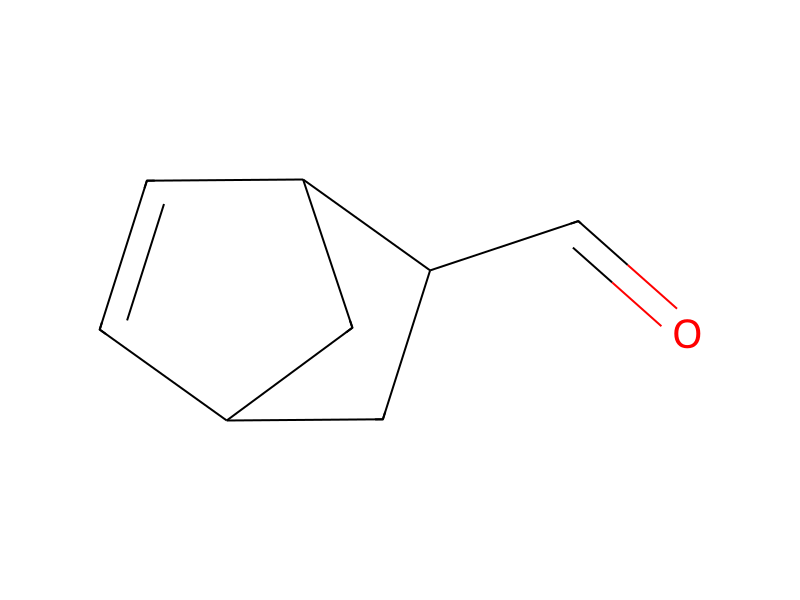

Product 1

Reagents, catalysts & solvents 1

Conditions
- Temperature
- 0 °C
Procedure
In a nitrogen atmosphere at −70° C., 1290 ml of 1.6M n-butyllithium in hexane was added to a mixture of 168 g of 1,1,1,3,3,3-hexafluoro-2-propanol and 1200 g of tetrahydrofuran. The mixture was allowed to warm up slowly to 0° C. and stirred at the temperature for 30 minutes. Then 134 g of 5-norbornene-2-carboxaldehyde was added at 0° C. The mixture was stirred for 1 hour, after which dilute hydrochloric acid was added for quenching and neutralization. This was followed by conventional aqueous work-up and purification by silica gel column chromatography, collecting 230 g of 1-(5-norbornen-2-yl)-2,2,4,4,4-pentafluorobutane-1,3,3-triol (yield 80% based on the 1,1,1,3,3,3-hexafluoro-2-propanol).
Workup
- stirringThe mixture was stirred for 1 hour
- customfor quenching
- customThis was followed by conventional aqueous work-up and purification by silica gel column chromatography
- customcollecting 230 g of 1-(5-norbornen-2-yl)-2,2,4,4,4-pentafluorobutane-1,3,3-triol (yield 80%
Sources & evidence
- ORD record
- ord-7865aa7ca71b4e469ec7648ef55f5df5
- Source dataset
- uspto-grants-2009_12
- Patent number
- US07638256B2
Reaction notes
Loading…