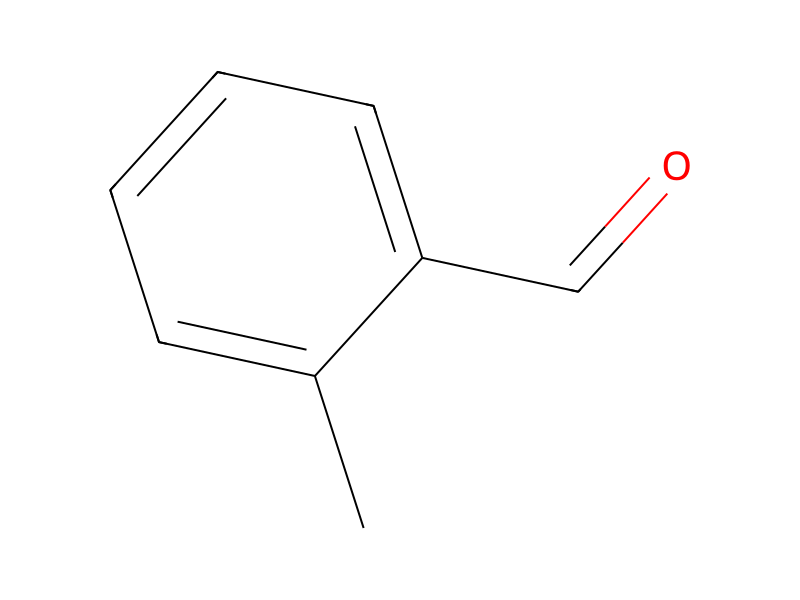
2-Methylbenzaldehyde → HCID 16092064, compound
Reaction equation

[CH3:1][C:2]1[CH:7]=[CH:6][CH:5]=[CH:4][C:3]=1[CH2:8][CH2:9]CN.[C:12](CP(=O)(OCC)OCC)#[N:13].[H-].[Na+].CC1C=CC=CC=1C=O>O1CCCC1>[CH3:1][C:2]1[CH:7]=[CH:6][CH:5]=[CH:4][C:3]=1[C:8](=[CH2:9])[C:12]#[N:13]Participants
Reactant 4



Product 1

Reagents, catalysts & solvents 1

Procedure
Procedure for the preparation of 3-(2-Methylphenyl)propylamine ##STR142## 3-(2-Methylphenyl)propylamine: Diethyl cyanomethylphosphonate (5.0 ml, 30.9 mmol) was added to a stirring suspension of sodium hydride (60% oily suspension, 1.24 g, 31 mmol) in tetrahydrofuran (50 ml) under argon. After 30 min, 2-methylbenzaldehyde (3.6 ml, 31.1 mmol) was added and stirring continued for 1 h. The reaction was quenched by the addition of water and extracted with dichloromethane followed by drying and evaporation of the organic solution. Column chromatography (hexane; hexane:ethylacetate=3:1) provided 2-(2-methylphenyl)acrylonitrile as an oil. This material (3.8 g), 10% palladium on carbon (3.8 g) and 12 N hydrochloric acid (11.8 ml, 142 mmol) in methanol (125 ml) were hydrogenated with hydrogen at atmospheric pressure for 2 d. The catalyst was removed by filtration and the solvent was evaporated. The resultant material was partitioned between dichloromethane and water. The aqueous layer was made basic with 10 N sodium hydroxide and extracted with dichloromethane, followed by drying and evaporation. The resultant material was purified on a silica gel column (chloroform:methaol:triethylamine=85:10:5) to provide the title compound as an oil.
Workup
- waitcontinued for 1 h
- customThe reaction was quenched by the addition of water
- extractionextracted with dichloromethane
- customby drying
- customevaporation of the organic solution
Sources & evidence
- ORD record
- ord-c5190b69594c449a8bb1aa12a17f2673
- Source dataset
- uspto-grants-2000_08
- Patent number
- US06096753
Reaction notes
Loading…