Hydrochloric Acid → Diphenylmethylphosphonic acid
Reaction equation

Br[CH:2]([C:9]1[CH:14]=[CH:13][CH:12]=[CH:11][CH:10]=1)[C:3]1[CH:8]=[CH:7][CH:6]=[CH:5][CH:4]=1.[P:15]([O:22]CC)([O:19]CC)[O:16]CC.BrCC.Cl>O>[CH:2]([P:15](=[O:16])([OH:22])[OH:19])([C:9]1[CH:14]=[CH:13][CH:12]=[CH:11][CH:10]=1)[C:3]1[CH:8]=[CH:7][CH:6]=[CH:5][CH:4]=1Participants
Reactant 4


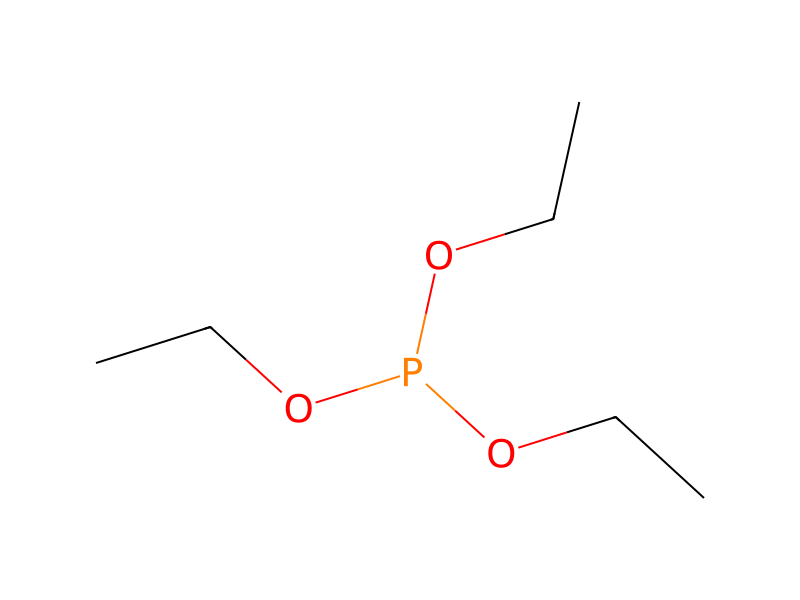

Product 1

Reagents, catalysts & solvents 1

Procedure
Benzhydrylphosphonic acid was prepared as follows. 308.93 g (1.25 moles) of bromodiphenylmethane (Aldrich Chemical Company) and 240.93 g (1.45 moles) of triethyl phosphite (Aldrich Chemical Company) were combined under nitrogen, heated carefully and maintained at 160° C. with removal of bromoethane by-product by distillation over a period of 4 hours. 750 ml of concentrated hydrochloric acid (~12 molar) and 250 ml of distilled water was added to the crude product and the mixture was refluxed under nitrogen for two days (approximately 40 hours). The frothy mixture was allowed to cool and then filtered. The resulting solid was then washed with water, to remove the remaining hydrochloric acid, and then with petrol (b.p. 60-80° C.), to remove hydrocarbon by products, for example 1,1,2,2-tetraphenylethane. The solid was then dried in a vacuum oven at 120° C. 250.06 g (81% yield) was obtained.
Workup
- temperatureheated carefully
- temperaturethe mixture was refluxed under nitrogen for two days (approximately 40 hours)
- temperatureto cool
- filtrationfiltered
- washThe resulting solid was then washed with water
- customto remove the remaining hydrochloric acid
- customwith petrol (b.p. 60-80° C.), to remove hydrocarbon by products
- customThe solid was then dried in a vacuum oven at 120° C
- custom250.06 g (81% yield) was obtained
Sources & evidence
- ORD record
- ord-44c8a53faa7c4265bd9a730eb857c77b
- Source dataset
- uspto-grants-2000_08
- Patent number
- US06099895
Reaction notes
Loading…