Potassium Carbonate → N,N-Diphenyl-6-bromo-2-naphthylamine
Reaction equation

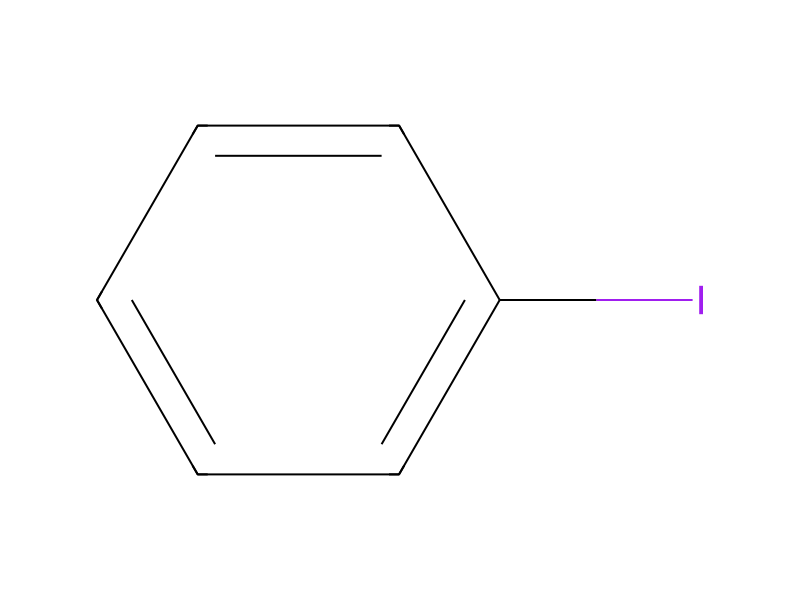
[C:1]1([NH:7][C:8]2[CH:17]=[CH:16][C:15]3[C:10](=[CH:11][CH:12]=[C:13]([Br:18])[CH:14]=3)[CH:9]=2)[CH:6]=[CH:5][CH:4]=[CH:3][CH:2]=1.I[C:20]1[CH:25]=[CH:24][CH:23]=[CH:22][CH:21]=1.C(=O)([O-])[O-].[K+].[K+].C1OCCOCCOCCOCCOCCOC1>[Cu].C1C(Cl)=CC=C(Cl)C=1>[C:1]1([N:7]([C:8]2[CH:17]=[CH:16][C:15]3[C:10](=[CH:11][CH:12]=[C:13]([Br:18])[CH:14]=3)[CH:9]=2)[C:20]2[CH:25]=[CH:24][CH:23]=[CH:22][CH:21]=2)[CH:2]=[CH:3][CH:4]=[CH:5][CH:6]=1Participants





Procedure
A mixture of N-phenyl-6-bromo-2-naphthylamine (29.8 g. 0.10 moles), iodobenzene (50 g. 0.245 mol.), potassium carbonate (60 g. 0.434 mol.), copper bronze (4.0 g. 0.063 g. atoms), 18-crown-6 (3.7 g. 0.014 mol.) and dichlorobenzene (100 ml) was kept under reflux for 3 hours under nitrogen, cooled and filtered. The residue remaining after concentration of the filtrate, was chromatographed over 600 g of silica gel. Elution with toluene-heptane (1:9), gave the product, 28.65 g., m.p. 135.8-137.4° C., in 77% yield. Mass Spec: m/z 373, 375 (M+), 421 (M+ iodo). The product was contaminated with a small amount of the corresponding iodo compound. A sample recrystallized from heptane, m.p. 137.9-139.2° C. was analyzed. Analysis calculated for C22H16NBr: C, 70.59; H, 4.31; N, 4.09; Br, 21.35. Found: C, 69.23; H, 4.22; N, 3.61; Br, 20.56.
Workup
- temperatureunder reflux for 3 hours under nitrogen
- temperaturecooled
- filtrationfiltered
- customwas chromatographed over 600 g of silica gel
- washElution with toluene-heptane (1:9)
- customgave the product, 28.65 g
- customA sample recrystallized from heptane, m.p. 137.9-139.2° C.
Sources & evidence
- ORD record
- ord-4a5784eafef041ce9fafe1f6bae54ca6
- Source dataset
- uspto-grants-2000_08
- Patent number
- US06100405
Reaction notes
Loading…