Sodium Hydroxide → Hydrochloric Acid
Reaction equation

[C:1]1([C:36]2[CH:41]=[CH:40][CH:39]=[CH:38][CH:37]=2)[CH:6]=[CH:5][C:4]([C:7](=[N:9][O:10][CH2:11][CH2:12][O:13][C:14]2[CH:19]=[CH:18][C:17]([CH2:20][CH:21]([N:27]([C:30]3[CH:35]=[CH:34][CH:33]=[CH:32][CH:31]=3)[CH2:28][CH3:29])[C:22]([O:24]CC)=[O:23])=[CH:16][CH:15]=2)[CH3:8])=[CH:3][CH:2]=1.[OH-].[Na+].[ClH:44].O1CCOCC1>>[ClH:44].[ClH:44].[C:1]1([C:36]2[CH:37]=[CH:38][CH:39]=[CH:40][CH:41]=2)[CH:2]=[CH:3][C:4]([C:7](=[N:9][O:10][CH2:11][CH2:12][O:13][C:14]2[CH:19]=[CH:18][C:17]([CH2:20][CH:21]([N:27]([C:30]3[CH:31]=[CH:32][CH:33]=[CH:34][CH:35]=3)[CH2:28][CH3:29])[C:22]([OH:24])=[O:23])=[CH:16][CH:15]=2)[CH3:8])=[CH:5][CH:6]=1Participants
5




Procedure
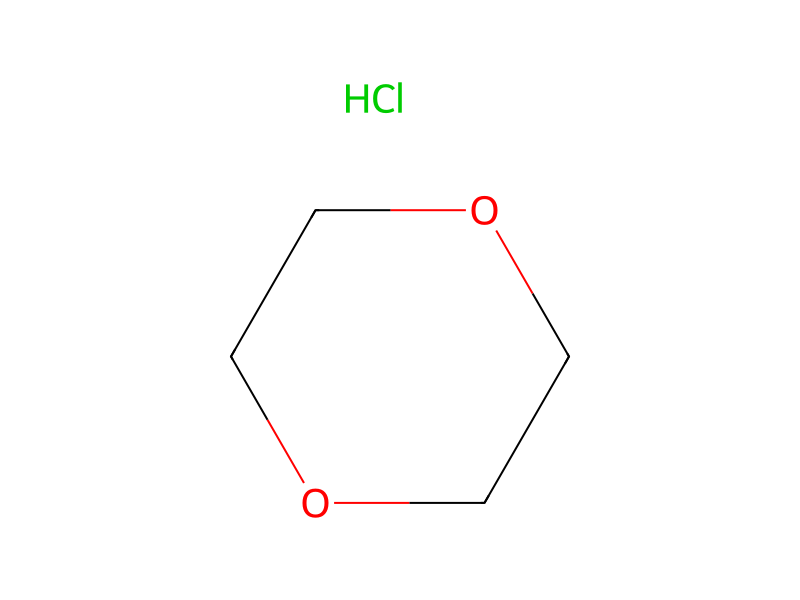
Reaction and post-treatment were carried out according to Example 4 using 353 mg of ethyl 3-[4-[2-[[1-(4-biphenylyl)ethylidene]aminoxy]ethoxy]phenyl]-2-(N-phenyl-N-ethylamino)propionate obtained in Example 11 and 2 ml of a 1N aqueous sodium hydroxide solution. The product thus obtained was further treated with a 4N hydrogen chloride-dioxane solution to obtain 280 mg of hydrochloride of the desired compound as an amorphous powder.
Workup
- customReaction
- customThe product thus obtained
Sources & evidence
- ORD record
- ord-e6fc2e734a284265b32e69d1d52421f3
- Source dataset
- uspto-grants-2000_08
- Patent number
- US06103907
Reaction notes
Loading…